


 Share
ShareProtecting & Supporting Your Child Through Divorce
Divorce can feel like the ground is shifting beneath you. It’s emotional, exhausting, and full of unknowns. And if you’re a parent, you’re not just navigating your own storm—you’re trying to protect your kids from being swept up in it, too. Supporting your children through divorce is incredibly hard.
You’re not alone. This is hard—I’m now three years into my separation and divorce and there are still challenging days.
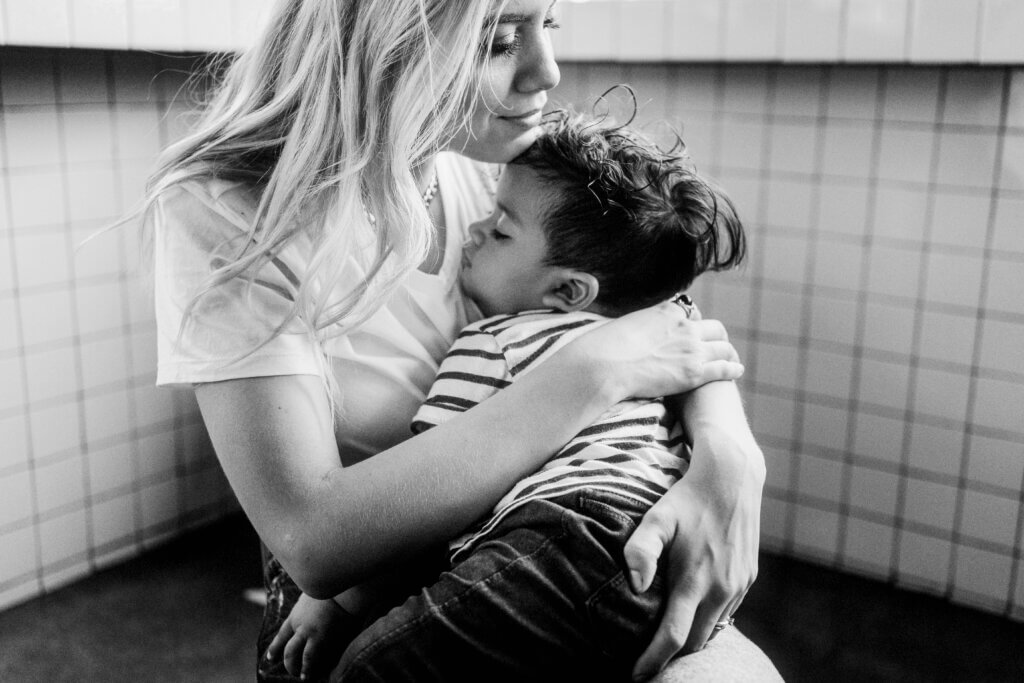
In the early days of separation and divorce, it’s especially tough when you want to show up with confidence and ease for your kids, meanwhile you are feeling incredibly uncertain and maybe scared. You want to tell your kids that everything is fine, that they have nothing to worry about – and yet you are struggling with a mountain of worry.
How will you keep the house?
Do you need to get a new job?
How will you tell your parents, your family and friends?
What and when should you tell the school or your kids’ teachers?
Will your kids be okay? How will this divorce affect them?
The good news? With intention, connection, and a few powerful tools, you can help your child feel safe, seen, and supported through the changes ahead. Yes, they will be okay and so will you.
Let’s talk about what that could look like.
Big Feelings Are Not a Problem to Solve
Tantrums, shutdowns, clinginess, anger, regression—all of these are normal responses to big changes. Divorce brings up grief, confusion, fear, and frustration. And just like adults, kids process in waves.
I remember many days just trying to get to school and my child was so upset about not having the right outfit/shoes or was feeling rushed. It wasn’t about any of those things. It was the divorce. And instead of trying to convince them that they just needed to pick a pair of shoes so we could get out the door on-time,
I stopped everything and just held them while they cried. I said, “We don’t need to get to school on-time. Let’s just have our feelings and we will go when we are ready.”
Positive Discipline reminds us that behavior is communication. Your child isn’t being “bad”—they’re feeling sad, angry, confused and they don’t have the skills yet to self-regulate. They need your help.
What to do instead of trying to stop the feelings
- Validate their feelings: “This is a big change. It makes sense that you’re upset.” When we name the feelings, it tells our brain we are safe and helps kids get back to calm faster.
- Use connection before correction: “I love you and the answer is no.” “It’s okay to be mad. It’s not okay to hit me.” “You are feeling sad that you cannot see your dad today. It’s okay to be sad. It’s not okay to throw your toys.”
- Practice co-regulation: Name their feelings and your own. Offer calm presence and hugs. Model healthy emotional regulation by taking your own deep breaths, turning on soothing music, smelling lavender or other scents that help you feel calm.
- Give space for big feelings: This is NOT always possible, but when you have the time, stop everything and give space for feelings. Just let the feelings out. Cry together. Tell them you love them and that their feelings are safe with you.
Big feelings are normal. Humans are deeply feeling. What matters is that your child knows that their feelings are safe with you.
Support Through Transitions
Transitions are tough—especially now. Shifting between homes, different rules, not having all their things in one home, and new family expectations can leave kids feeling uncertain. Their sense of safety is tied to predictability, so when life is in flux, they often test limits, stop listening or explode in big feelings.
Helpful transition tips:
- Create visual schedules or calendars for younger kids (toddlers to early elementary school) so they know what to expect.
- Develop goodbye and hello rituals that anchor them emotionally.
- Offer choices and autonomy when possible (e.g., “We need to pack 7 shirts. What shirts do you want to bring?”).
- Keep structure consistent in your home—same bedtime routine, snack rituals, or family agreements. You can’t control your co-parent and their home, but you can control the consistency in your own home. If you can keep it consistent across homes – even better!
Consistency builds safety. It sends the message: “Even when things change, you can count on me.”
Talking to Kids About Divorce
You don’t need to give your kids every detail, but you do need to talk to them. Keep it age appropriate. Kids are great perceivers but poor interpreters. They are relying on you to interpret the situation for them. Should they be scared? Was it their fault? What will happen with their home? Their pet?
Kids crave honesty—especially when the silence is loud. If you don’t talk about what’s happening, they’ll make up their own story. And that story often includes self-blame, shame and fear.
What to say (and what not to say):
- Keep it simple: “We’ve decided to get a divorce. This means X parent is moving out. What isn’t changing is that we both love you so much. We will always be a family. It’s just going to be different.”
- Avoid blaming your ex or oversharing: Don’t make them feel like they have to choose sides. Stop yourself from saying negative things about their other parent (just let it out in your head or in a text with your bestie)
- Reassure the core truth: “You are safe. You are loved. This is not your fault. We both love you”
- Keep the door open for ongoing conversations: Kids will return to this topic again and again, at different stages of the uncoupling process. Ask them, “what questions do you have? How are you feeling right now about the divorce?”
- When you don’t have an answer: You can say “I don’t know yet, but you can trust that your parents will figure this out.” That’s enough.
When New Partners or Families Are Involved
One of the trickiest parts of post-divorce parenting is introducing new romantic partners or navigating blended family dynamics. This can stir up jealousy, confusion, or fear in kids (and for sure in us adults)—even if they like a new partner.
How to support your child through these shifts:
- Go slow. Let trust build naturally—don’t rush closeness or expect instant bonding.
- Be clear: “No one is replacing your mom/dad/parent. You will always have your original family, and now there are more people to love you. Isn’t that great?”
- Respect your child’s pacing. Some kids will be excited. Others will need space and time.
- Regularly check-in: Ask your child how they are feeling? Ask them if they have any questions or need anything to change? What isn’t working for them?
- Schedule special time: If you have a new partner or a new blended family, make sure to carve out special time, just one-to-one time with each of your kids. Let your kids choose what your activity is. It doesn’t have to be something you pay for, just something only the two of you do together. Only have 15 minutes? That’s enough.
- Hold space for all the feelings—even the messy ones. Your child might need to know that loving someone new doesn’t mean betraying their other parent. Celebrate with them when they have stories to share about your ex’s new partner and their family.
- Keep your judgments for your next call with your friends. Believe me, I know how hard it is to keep it inside.
Final Thoughts: You get to create the story
Your child has never experienced divorce before. You may have your own stories and your own experiences from childhood, but they don’t. This is it for them. Which means, you get to drive the narrative, tell the story you wish you would have lived through. What story is helpful, caring and supportive for your child and also real? Take time to journal it out. Live that story. Help them see the opportunities that divorce brings for kids:

Your parents are happier in our new lives. Now we can show up better for you.
You get two homes! And maybe double holiday and birthday celebrations.
Your family is growing! There are more people to love you.
You get more vacations and special time with each of your parents.
You are your child’s anchor—not because you’re perfect, but because you keep showing up in the best way you can. You can keep holding this story for them – a story of happiness, joy, and peace after divorce.
In a high conflict situation with your ex? This happy joyful story might not be their experience at their other parent’s house, but it can be at yours. You don’t need to smooth over their experience and tell them everything is fine. But you can help point out all the things that are positive and hopeful in this new life, even if it’s just on one side.
Validate their experience and their feelings and hold this story of hope. It can be both.
You’re building something new. And even though this chapter is hard, it’s also full of potential—for growth, for resilience, and for deeper connection with your kid(s).
Give yourself permission to grieve, to rest, to ask for help. You will NOT always show up as your best self. That is OKAY. You have permission to be messy. This is not about being the perfect parent, but being an intentional one.
And if you’re ready for more support, community, and tools, we’re here for you. Comment below with your questions or check out our other coaching offerings.
Looking for real-time support?
Divorce or separation is rarely easy — especially when kids are involved. As you navigate uncertainty, grief, and shifting roles, having a guide can make all the difference.
That’s where co-parenting coaching steps in.
Why this matters
- You’ll be supported in staying rooted in your values, even when emotions run high.
- You’ll gain tools to make informed decisions — not from panic, but from clarity.
- You’ll be held through the ebb and flow of life beyond the breakup — with compassion, boundaries, and forward momentum.
- You’ll begin to build healthy, peaceful relationships—with your children, your former partner, and yourself.
Let’s get started
If you’re ready to move through this chapter with more confidence, clarity, and heart, I’d love to walk alongside you. Learn about co-parenting coaching here.
Sign up for your FREE 30 min consultation here.



Comments