


 Share
ShareTeaching Persistence
When we think of the character traits and skills we hope our children have when they grow up, persistence is likely on the list. This is because researchers like Alfie Kohn, Daniel Pink, and Carol Dweck, write that persistence, when built within, makes us more successful and happier.
We all want our children to be happy and successful, whatever that means to them. How do we help them reach their full potential?
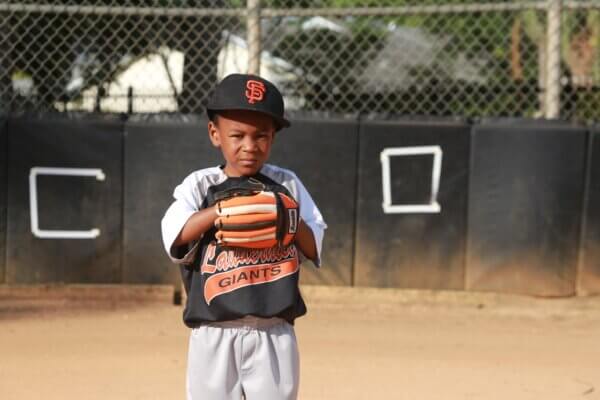
“Just as a ready stance in baseball (knees bent, glove out, eyes on the ball) makes us more likely to catch a ball if it happens our way, the ready positions in our brains dictate how we react to challenges and new events.”
~Kristine Mraz and Christine Hertz, A Mindset for Learning.

Prepare the brain through play
Play is essential for children’s development. Play literally changes the neural connections in the brain (prefrontal cortex) creating this “ready stance” for executive functioning skills to be developed. These incredibly important skills are the ones kids need to be successful in school and life (e.g. problem solving, flexibility, persistence, emotional stability, creativity etc). Children need uninterrupted time to play, AND they need to play in relationship with you. This means when they are starting to get stuck and want to give up, find a way to make it playful and fun.
“I know your legs are getting tired on this hike. We are almost to the turn around point. Let’s pretend to be giant dinosaurs and stomp our way to that next big tree.”
(find the research: Lev Vygotsky, Mraz and Hertz, Sergio Pellis)
Bringing all the skills together
Yet persistence in isolation isn’t necessarily helpful. How can children grow if they keep trying without any change in result? How can we teach children what to do when persistence alone doesn’t work? Children need persistence and tenacity to get back up and over learning hurdles, and also the ability to recognize when to be flexible and try something else.
Persistence combined with problem solving, flexibility and emotional regulation is key.
Wow. These are big skills. Skills we are still practicing as adults.
The next time your child meltdowns over blocks, legos, alphabets or simply getting dressed, remember that these are big skills they are practicing and they need your help to break it down into small steps.
Here are some tips to get you started:
Accept the child you have
Start with curiously observing your own child and accepting where they are in their development to get a sense of the just-right amount of risk and challenge. This is what child psychologist Lev Vygotsky called the “zone of proximal development” for developing minds. What they can do independently is the beginning of the zone, and what they cannot do (even with help and small steps) is at the end. It is never too early or too late to meet them where they are.
Bring Awareness
Point out the obvious by explicitly giving them the definition and highlighting examples.
“Persistence means sticking with something even when it is challenging. It means you try and try again even when it is hard.” ~Mraz & Hertz
Then use it in context!
“That looks really hard and you are not giving up. You are being persistent and growing your brain.”
Tell a story
Children love stories, especially ones about themselves! Tell a story about a time when they did not give up (HINT make it dramatic!). Once they get the hang of it, invite them to tell their own stories of when they were persistent. One family used a dice at dinner time for conversation starters. If they rolled a 4, they shared a story of how they persisted that day.
Storytelling is not only fun, it also grows their brain. When children repeatedly hear stories with persistence at their core, they grow the neurons that help them look for it in new situations.
Read a book
Children’s books are always helpful to teach concepts. These are some of our favorites:
I’m Gonna Push Through! By Jasmine Wright
A Little Bit of Oomph! By Barney Saltzberg
Maxwell’s Mountain by Shari Becker
The Most Magnificent Thing By Ashley Spire
Use encouragement instead of praise
For intrinsic motivation, children need autonomy, purpose, and mastery. They underperform when bribed with stickers and rewards. Remind them of what they can do by keeping your encouragement focused on them: the more specific and less judgmental the better:
You figured it out by yourself!
That looks like it took a lot of effort.
What do you plan to do next?
Look how far you’ve come. You can do it.
How many ways did you try it before it turned out that way?
I see that you are frustrated. (then model taking a deep breath) I am here with you.
What did you struggle with today?
Model and teach self-talk
The word “mantra” in Sanskrit means “instrument for thinking.” Self-talk is a powerful habit for directing the mind toward positivity. It is important, especially for young children, to give them the script. Have them literally repeat it after you! For example, when your child starts a game and wants to stop in the middle, or is struggling with a new skill they are learning, have them say out loud,
“I can keep trying. I can try a different way. This is growing my brain.”
When we teach them to think for themselves by using curiosity (what and how questions), they create their own self talk in response:
“What is a different way you could try that?” (I can try it another way!)
“What would happen if you turned the block the other way?” (I have an idea!)
Comments