

Eps 659: Free-Range Teens with Lenore Skenazy
Episode 659
What if our teens are far more capable than our anxious culture lets us believe? (spoiler: they are) In this episode, I sit down with Lenore Skenazy to talk about raising independent, resilient teenagers in a world built on fear. We dig into why kids crave independence, how “worst-first thinking” keeps us stuck, and practical tools to help your teen practice real-world skills before they launch. If you’re ready to trade control for trust, this conversation is for you.
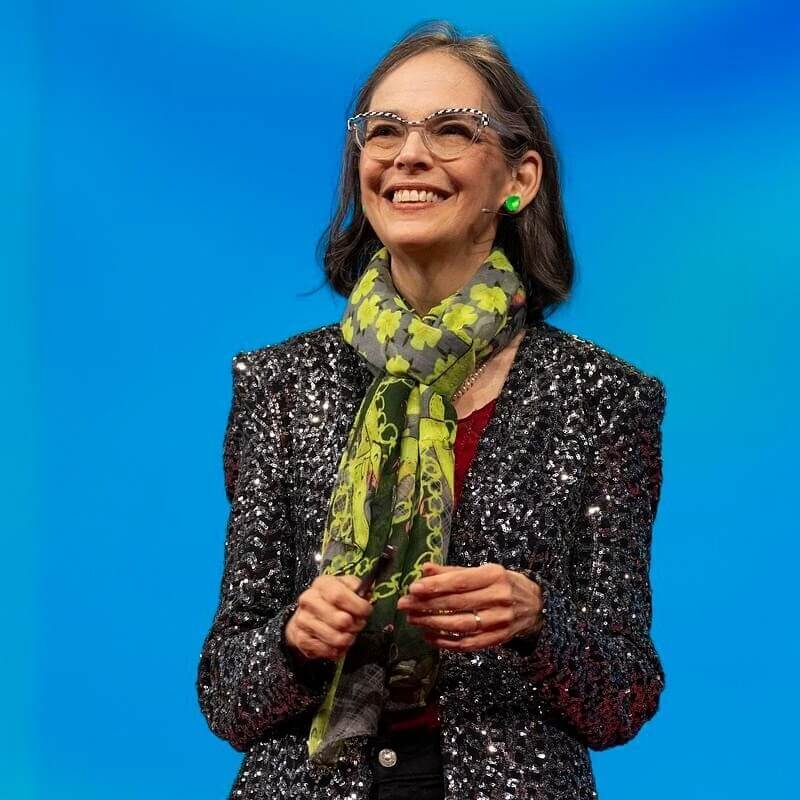
Guest Bio: Lenore Skenazy is a cultural critic, longtime New York–based journalist, and TED mainstage speaker who sparked a global conversation when she wrote about letting her nine-year-old ride the subway alone. She founded the Free-Range Kids movement and co-founded Let Grow, a nonprofit helping kids build confidence, resilience, and real-world skills through greater independence. Her work has been featured on CNN, the Today Show, and in The Atlantic.
Community is everything!
Join our community Facebook groups:
Takeaways from the show
- Our job is relationship, not control.
- Independence rewires both teen and parent.
- Beware “worst-first thinking” about your kids.
- Competence in one area builds confidence everywhere.
- We want things to occasionally go wrong.
- Take time for training, then hand over.
- Structure and freedom are not opposites.
- Give them a phone-free place to gather.
- Looking too closely magnifies every flaw.
- Create space so both generations can breathe.
“Let’s start with the courage part. The courage part is being able to sit with the discomfort of not knowing… And then the joyful part comes with realizing that’s okay. And recognizing that that’s part of your job—to be uncomfortable so your kid can grow. And it’s the rotten part, but then the joy cometh in the morning, when you see, ‘Hey, that’s my kid.'” – Lenore Skenazy
Resources Mentioned
- Let Grow — letgrow.org (nonprofit increasing childhood independence)
- The Independence Inventory — Let Grow’s “adulting” assignment of real-world tasks
- The Let Grow Experience and Let Grow Play Club — free, school-based programs
- Free-Range Kids — Lenore’s book and movement
- Camilo Ortiz — NYC psychologist studying independence as therapy for childhood anxiety
- All the Single Ladies by Rebecca Traister
- The Blessing of a Skinned Knee by Wendy Mogel
- Lenore’s TED Talk (referenced; Chris Byrne’s “three worlds” analogy)
- The Harris Poll graph on how kids (ages 8–12) prefer to spend time with friends
- Find Lenore: letgrow.org; Let Grow on all social platforms; @FreeRangeKids on Twitter/X
We are here for you
Join the email list
Join our email list! Joyful Courage is so much more than a podcast! Joyful Courage is the adolescent brand here at Sproutable. We bring support and community to parents of tweens and teens. Not a parent of a teen or tween? No worries, click on the button to sign up to the email list specifically cultivated for you: Preschool, school-aged, nannies, and teachers. We are here for everyone who loves and cares for children.
I'm in!Classes & coaching
I know that you love listening every week AND I want to encourage you to dig deeper into the learning with me, INVEST in your parenting journey. Casey O'Roarty, the Joyful Courage podcast host, offers classes and private coaching. See our current offerings.
Transcription
[00:00:05:17 - 00:01:18:07]
Casey O'Roarty
Welcome, welcome, welcome to the Joyful Courage Podcast. This is a place where parents of tweens and teens come to find inspiration, information, and encouragement in the messy terrain of adolescence. This season of parenting is no joke. And while the details of what we're all moving through might be slightly different, we are indeed having a very collective experience. This is a space where we center building relationship, nurturing life skills, and leaning into our own personal growth. And man, the opportunity's abound, right? My name is Casey O'Rourdy. I am a parent coach, positive discipline lead trainer, and captain of the adolescent ship over at Sproutable. I'm also a speaker and a published author. I've been working with parents and families for over 20 years and continue to navigate my own experience of being a mom with my two young adult kids. I'm so honored that you're here and listening. Please give back to the podcast by sharing it with friends or on social media, rate and review us on Apple or Spotify. Word of mouth is how we grow. Thank you so, so much. Enjoy the show.
[00:01:18:07 - 00:01:21:13]
(Upbeat Music)
[00:01:23:16 - 00:03:57:02]
Casey O'Roarty
Hello listeners. Welcome back to the Joyful Courage podcast. I'm so glad that you're here. And you know, one of the things that I talk about all the time on this show is that our job as parents of tweens and teens isn't to control our children. It's to be in relationship with them, to trust them, to let them practice being capable people in the world, even when our nervous system is screaming at us and managing. And if you're anything like me, that can be easier said than done because we love them so much and the world feels so loud and so scary and we have way too much access to information and the pull to optimize, orchestrate, protect, it's really real. And that's why I'm so excited about today's conversation. My guest today is Lenore Schenazy. And if that name rings a bell, there's a good chance that you remember why. Lenore is a cultural critic, a longtime New York based journalist and a Ted mainstage speaker who really cracked open the modern parenting conversation when she wrote about letting her nine year old ride the New York city subway by himself. That one column sparked a global conversation about safety, independence, and what we're actually doing when we over protect our kids. And that led her to launch the free range kids movement, which has been challenging the culture of over protection ever since. Lenore went on to co-found Let Grow, a nonprofit working with schools, educators, and communities to help kids build confidence, resilience, and real world skills through greater independence. Her work has been featured on CNN, in the Atlantic, on the Today Show, and just about everywhere parents and educators are having honest conversations about what kids actually need to thrive. What I love about Lenore's work and why I knew I was a big old yes to having her on the show is that it lines up so beautifully with the heart of positive discipline and the belief that our kids are capable, that trust grows responsibility. In this conversation, we're going to get into why teens are often thrilled by independence, the practical tools she's developed called the independence inventory that you can start using right away. And what she's noticed about the high school seniors who really stand out, how to begin shifting from optimizing your teen's path to letting them own it. Oh my gosh, Lenore, that is the language that I speak all the time. I'm so excited. Welcome to the podcast.
[00:03:57:02 - 00:04:00:08]
Lenore Skenazy
Well, thank you. That was quite the intro. Thank you so much.
[00:04:00:08 - 00:04:13:03]
Casey O'Roarty
So the moment that started it all. So will you share a little bit about where so many of us first met your work that now famous moment where you let your nine year old ride the subway?
[00:04:13:03 - 00:05:26:16]
Lenore Skenazy
That was it. I let my nine year old ride the subway. It was way back. He's 28 now, so you can do the math. Long time ago, he'd been asking me and my husband if we would take him someplace he hadn't been before here in New York City and let him find his own way home by subway. That was just his big desire. He kept talking about it. Finally, we said yes. I took him to Bloomingdale's, which is where we hadn't been because there's plenty of wonderful thrift shops in New York. Why would you go to Bloomingdale's? And I left him there and sure enough, he took a subway and then he had to take a bus across town because we lived in an obscure part of the city and came into the apartment levitating with pride and excitement. And I was a newspaper columnist back then. And so I wrote a column, why I let my nine year old ride the subway alone. And two days later I was on the Today Show, MSNBC, Fox News and NPR, defending this decision to let him do something, unsupervised without a phone, without, I gave him quarters, there were phones back then if he needed to call me, he could call me. I gave him $20, God forbid he needed a taxi. It was probably before Uber even, but they didn't have a phone so it didn't matter. Anyways, the point is he came home as I knew he would and it was a
[00:05:27:22 - 00:05:36:09]
Lenore Skenazy
milestone mostly for him because he knew that he was ready to do this. And I feel like kids have these
[00:05:37:10 - 00:06:22:21]
Lenore Skenazy
desires to be, to conquer the world or to at least walk to their friends or to go get a candy bar and they don't always need us. And certainly by the time they're teens, it is time to like loosen the reins because not only do they get this feeling of competence and actual competence, right? Not just a feeling, they actually do things. But it's the only thing that rewires us. And as you're a parent of an older kid, you start having to realize like, I can't be there every second. I can't him him on a leash, right? I'm not always gonna be there. This is part of the process. And so for us to feel good about letting go, ironically, you have to let go and let grow a little before you're ready because that's what rewires you to take the next step.
[00:06:22:21 - 00:06:33:22]
Casey O'Roarty
Yes, oh my gosh. And how did you, so you said he'd asked and he'd asked and he'd asked, what was it that finally got you to that place of like, no, okay, let's do it.
[00:06:33:22 - 00:08:32:02]
Lenore Skenazy
How did you know? Oh, I don't remember. I mean, like I said, it's been so long. I guess it was a while ago. But I'm assuming, cause you know, they did other things too. I mean, they, you know, I had two boys, they would go to the boys bathroom without me. I wouldn't drag them into the ladies room. It was generally, it wasn't a specific moment, but it was more of a belief that they could do this, you know, come to think about what am I afraid of? And then actually, you know, when I wrote Free Range Kids, which is also a long time ago, I talked to a bunch of psychologists about this. And one of them said, if you're gonna say no, at least write down your reasons. Oh, they could be, you know, kidnapped. They could, you know, eat the wrong thing. They could be bullied. And you have to sort of think about what are the odds and what are the, you know, it's not just, it's not just, do those things are so bad, let's not let them do it. There's also bad things going on when you don't let go at all. And we've seen this. I mean, there've been studies, there was a journal of pediatrics article a couple of years ago that showed that as kids, independence has been going down because we've been told that they're not allowed to do anything on their own that's too scary, it's too bad, we'll be bad parents if we let them go. As their world has constricted, their mental health has gone down the drain. And so it almost strikes me as obvious that, well, if you've taken away something and they're drooping, it's sort of like if we took away kids food, right? What if we took the oxygen out of the room, they would be drooping, they would be gasping, they would be in bad shape. And that's what we've done with a lot of childhood is we let them do so few things. I mean, you know, kids are allowed to do very little that we used to do. I mean, there's studies that show that of kids, even into their teens, not being allowed to walk around the neighborhood, some of them not being allowed off the block. And, you know, you can take how demoralized you would feel if your parents told you, you know, I love you, but there's people in the world, so you can't go out.
[00:08:32:02 - 00:10:24:05]
Casey O'Roarty
Yeah, for sure. And I, you know, something that I just even this morning talked about with a group of parents, my eyes are always on the prize of my kiddos being well-practiced before they're launched out into the world. Like I want them to have room to make mistakes, to not make mistakes, like you're talking about, is how capable they are to grow their inner guidance system. I have a story of my kids and a friend of theirs going down to Seattle, which is, you know, a solid hour and a half, two hours away to go to a concert. And I did have, it was one of those stretchy yeses for me. I really wanted to say no, but I said yes. And I said, just, you know, keep, as I do, I said, keep your wets about, you pay attention and, you know, trust your gut. And they were waiting in line to get in and a fight broke out in the line. And they looked at each other and they said, you know what, let's go. There was just something in that experience and they trusted their gut and they came home and they text me on the way home and I was like, well, I'm gonna Venmo you 40 bucks, stop and get some food and, you know, well done listening to your gut. And if they're not in the experience of having to pay attention to the world around them, they don't learn how to pay attention to the world around them. Right? And that's really what I'm hearing you say. And it's so interesting how, because the world is loud and we do have way too much information and there's so many possible outcomes, it's interesting how as parents, it's so enticing to cling to the worst possible outcome as being the only one versus the best and everything in between.
[00:10:24:05 - 00:10:54:01]
Lenore Skenazy
Yeah, I coined a phrase for this, which has not caught on. Maybe it will catch on now that I'm on your podcast, but I call it worst first thinking. You come up with the worst case scenario first and you proceed as if it's likely to happen. And gosh, I was just hearing about a friend is having a younger, you know, nephew come for the summer. And they said that the mom is coming with the nephew to take him on the subway for a couple of times, first couple of times. Cause okay, how old is this nephew? Well, he's in his twenties.
[00:10:56:05 - 00:12:39:17]
Lenore Skenazy
And I thought, I understand that the mom feels anxious, but you're a mom, you signed up for this, right? Your job is to sit with a little bit of this anxiety so as not to so infantilize your 20 something kid who's going to an actual internship, you know, what are you going to go up there and get them to pass to the bathroom? I mean, you know, it's like, at some point you have to recognize that there's something really important about the independence that rewires you, but also rewires them. And then it sort of rewires the whole world. I've heard so many times from parents and these are parents of kids of all ages, that at first it was really hard, like you with this stretchy, you know, go into the concert. And I bet you would feel much more relaxed doing it a second time because they've already done it. Right? You've already been anxious. You've already, there's something bad has already happened. There was a fight, something good happened. They were smart enough to realize fight bad. And let me get out of here. And they did. And so you have all these new data points, as well as the dopamine hit of this pride, you wouldn't be telling me this story if you didn't feel some like, hey, look at my kids. They were so smart. They were with it. They were aware that they did something I really appreciate. So we've been our culture that's been telling us to always be with our kids and never trust, you know, the world around them has been depriving us of almost that crucial ingredient for our maturity, for our development. If you never get to see your kid do something on their own, you never get to realize how much they can do on their own. You still feel like you have to be constantly there and intervening. So as much as your kids need this, you need this because it's gonna change you in remarkable ways.
[00:12:39:17 - 00:13:00:10]
Casey O'Roarty
Yeah. That makes me just think about those parents whose kids do leave the house and go to college. I'm not, I should leave it, but I'm in the Facebook group for the parents at the university where my son goes. And it's like even down to the, well, we're enrolled in algebra two and how do we, yeah, like the lay- How do we do those problems?
[00:13:00:10 - 00:13:01:05]
Lenore Skenazy
We don't know.
[00:13:01:05 - 00:14:36:22]
Casey O'Roarty
Oh my gosh. It is incredible how, and then I think back to being in college in the early 90s. And I'm like, I don't think my parents asked me about move out or how I was, you know, I mean, we found our own place to live. Like we did so much. And then this last, my son's a sophomore and he just got home and it just out of nowhere occurred to me like, oh, what is your move out plan? Like, are you dialed in there? He's like, oh yeah, we got it. We got, you know, he figured it all out, you know, not because I was so good at not getting involved, but honestly, because I kind of forgot about it. And that was a huge gift because I think we also get of you're capable, you can handle this, you've got this. We were recently in New York city, my same son and I, and I did not grow up on public transit at all. So I was again, by default, he and I navigating the subway. I was so like, I don't know. He finally said, mom, let me figure it out. And I said, great, you figure it out. And again, it was this default moment where he got to take the lead simply because I did not know what I was doing. And you talk about how thrilled our teens are by independence, what a gift it is to them. And it's so different than thinking about, you know, this messaging around, oh, teens today are so fragile, which is a story that comes up. What are you seeing on the ground? Talk about what you're seeing with those high school seniors that gives you confidence in this generation of kids.
[00:14:36:22 - 00:15:35:07]
Lenore Skenazy
Well, I think the thing that gives us confidence in this generation gives us confidence in any generation, which is that they're humans. Their default mode is curiosity and survival. And that hasn't been rewired. And, you know, that just can't be taken out of the DNA of our species or any species. And so what I love hearing is just tales of people who let that happen. And so, you know, so I run let grow, let new word grow, which is the nonprofit devoted to increasing childhood independence and making it easy and normal and legal, in fact, for kids to do more on their own. And you mentioned earlier that we have an independence inventory, which is just a list of things. You could call it adulting. It doesn't really matter of things that teachers even or parents can assign to kids, a list of things to do in the real world, just to get them, you know, just to get
[00:15:36:08 - 00:17:57:22]
Lenore Skenazy
the basics down, return something to a store, make a haircut appointment, you know, find your way around a new city. I wish somebody would teach me how to use my Google maps better. I don't know why I'm always lost even using Google maps, but use a regular map to try to get somewhere just to get a feel for what it means when there isn't somebody saying, take a left at the corner. So I'll just tell you a couple of stories that I've heard from high schools. One was a high school in Ohio that was doing this. And the teacher sent me all these responses and I can't remember them now, which is another part about getting older. But one of them was simply that for her let grow, whatever we wanna call it, independence thing. This one girl decided to drive to look at some of the colleges that she was considering, you know, elsewhere in Ohio. And she said it was just amazing because she'd driven around her neighborhood, sure, but she'd never driven far, like where you really don't know where you are. And I think she took along a friend and, you know, that's a road trip. That's literally, you're on the road and you're on a trip. And, you know, there's sort of nothing more formative than that. And then on a much more granular scale, there was a Texas teacher who actually ran the school's ROTC, Junior ROTC in high school. And what he realized is that these kids, he was teaching them, you know, drop and get me 40 and, you know, run really fast and how to do a formation and all the regular parts of ROTC training. But he realized that on the flip side, most of them had never sewn on a button, right? They had to, they didn't know how to iron their own uniforms, things like this, change a bike tire, change a car tire. So what he assigned the kids was do something in the real world that's practical that you're gonna need probably for the rest of your life and make a, you know, because it's this era, you know, make it into a PowerPoint or something like that. But then more importantly, then teach it to someone younger. And those were just these fantastic, beautiful projects that he sent me to look at, you know, kids teaching each other, this is, you know, how to sew on a button and why hadn't they sewn on a button or used an iron? And this is what, this is what distresses me about our culture. You know, these are parents who have kids in high school who are actually ROTC, they might, you don't have to go on to the military, but you can.
[00:17:59:07 - 00:18:59:05]
Lenore Skenazy
And they were afraid like, oh, I don't want you to hurt yourself with the needle. Oh, I don't want you to burn yourself with the iron. And I don't laugh at the parents because this is a culture that has told us your kid can't even get off the bus and walk three houses down. You know, this is a culture that said you cannot just sign your kid into soccer. You must watch the entire practice four days a week. It's a culture that keeps telling us kids can't do anything on their own, sometimes even, you know, legally. And so we have lost our way in terms of recognizing what our kids really are capable of. So you do need a little counter programming and that's what Let Grow is trying to do. But the cool thing is that once the parents see that, it's, you know, it's the joy. It's the joy in both generations. So it's not like a drag. It's just like, oh, I should have done this sooner. I didn't, I live in a crazy culture. It's a culture of fear. Now you can go and drive yourself to the college. You can sell on a button. You can go to the concert.
[00:19:00:22 - 00:19:07:04]
(Bell Dings)
[00:19:08:15 - 00:20:43:13]
Casey O'Roarty
Yeah. Well, and I think there's some overlap also just with the overdoing for, you know, I talk to parents who are so frustrated by, you know, that their kids won't make a doctor's appointment on the phone and I have to remind them, I have to, you know, ask, well, when have they done it before? When have they practiced? Well, they haven't. I'm telling them to do it now. And so just like when they're young and one of our positive discipline tools that we talk about is, you know, take time for training, which I'm sure even your son had been on the subway before you left him at Bloomingdale's, right? Like take time for training practice, let them get a feel for it, give some scaffolding. And then you get to say, you know what? I'm handing this over to you. You know your schedule, you call the doctor. And sometimes I know what my kids, a baby step in was, here's a script. When they answered just say- Oh, that's interesting. Okay. Yeah. Just say, hey, this is, you know, this is Rowan. I need to make an appointment with doctor so-and-so. You know, just giving the talking points to begin with, to start, to bridge, you know, I had my older child was highly, highly anxious and she needed that, you know? And so versus like, why can't the frustration why can't you just do it? So often it's like, well, nobody's ever shown them how. They've never practiced. They don't know how to sew a button because no one ever thought to teach them. And so I think there's something there too. And I'm curious like, what is it about our culture? I wonder if it's a motherhood thing, a parenthood thing.
[00:20:43:13 - 00:21:26:18]
Lenore Skenazy
It's a hammer on mom's thing. I mean, here we are saying, oh, I haven't the moms taught them how to do it. It's because anytime we let our kids do something, we're told that we're not doing enough for them. I mean, it's really a culture that has modeled the idea that the best parent is the parent who's always texting, always has the lunch ready, you know, puts in a special note to let the child know that they are still loved even between the hours of nine and three. And so really there was, this will seem irrelevant, but there's a thread, which is that there was a book that came out, I don't know, five or 10 years ago, called "All the Single Ladies." And it was by a woman named Rebecca Traster. And it was about how single women were often the
[00:21:29:02 - 00:22:01:18]
Lenore Skenazy
avatars of big movements. You know, they were not only suffrage, but obviously suffrage, but also even the anti-slavery movement. And it's because single women didn't have the husband and the children, often a bunch of children, it was before birth control, that they had to take care of. And so they were free enough, and they were just as smart as anyone else, but they were free to start movements, you know, Emma Goldman, et cetera. And she said that, but interestingly in the culture, as soon as the,
[00:22:04:03 - 00:23:24:14]
Lenore Skenazy
what is it? The Industrial Revolution came along, you started seeing books about, you know, there's more to the home than you might think. So the minute you get a washing machine, the minute you get a vacuum cleaner, suddenly the standards for housekeeping just explode, right? And so any free time that you might've had because you have a labor saving device, is eaten up again by a higher standard of what you're expected to do. And to a certain extent, and I don't think it's nefarious, I don't think it's deliberate, but the parenting that you used to be able to get away with, like, you know, make your own sandwich or drink from the hose or get yourself to soccer, became I'll make you the sandwich and don't drink from the hose and I'll drive you to soccer. And that just happened as women were getting into the workforce, as women were starting to, you know, really flourish as equals, it became almost impossible because suddenly there was, you know, the statistic is that college educated women are spending an extra eight hours a week on childcare that they didn't spend back in the seventies when fewer of them were working full time. So something has made it seem like to be a good mom requires a lot more time and effort than it did a generation ago.
[00:23:25:18 - 00:23:51:17]
Casey O'Roarty
Yeah, and yes, and I'm just thinking about, you know, adolescents and on a call earlier, one of the parents saying, well, they think, they just think they're adults. They think they should be able to do whatever they want. And it's so interesting when I hear that language, really what I'm hearing is the tone. Yeah, I did that pretty well. Like how dare they think that?
[00:23:51:17 - 00:23:53:00]
Lenore Skenazy
Yeah, very disparaging.
[00:23:53:00 - 00:23:55:07]
Casey O'Roarty
And yeah, and it's, you know,
[00:23:56:16 - 00:24:38:05]
Casey O'Roarty
my response was like, why not meet them in their enthusiasm? And what you said earlier that continues regardless of a generation as part of us being human is that we are curious and we are out for survival. I mean, teen brain development, high risk taking, poor risk assessment absolutely is a part of it, novelty seeking part of it. Otherwise we never would have left the cave, right? Thank God for adolescents. But reminding parents, they don't want bad things to happen to them, right? And I feel like there's this, I don't know if it's a disconnect or forgetting, right? We sit inside of, well, they don't know enough.
[00:24:38:05 - 00:24:53:21]
Lenore Skenazy
So bad things will happen. I mean, of course you don't know enough. You're not as old as us, right? So you have to get there some way and sometimes the only way is through. What you talked about, about you don't want anything bad to happen to the kids is really interesting because
[00:24:55:00 - 00:28:18:00]
Lenore Skenazy
there's a professor in New York City, a professor of psychology named Camilo Ortiz. And what he has been doing, and now has a gigantic grant to do for three years, is studying independence as therapy for kids with a diagnosis of anxiety and that's children and adolescents. And I'll just tell you one quick story because it illustrates my point, which is that in the pilot study, which was it's a five week course of treatment, which is week one, he would just meet with the mom and dad or the single parent if that was the case and find out what's going on with your kid that brings you to this, to me. And in one case, it was a girl and she was not old, she was probably 10, who still wasn't sleeping in her own bed, okay? She was just too scared. And then the next week he meets with mom, dad and the kid. And normally in cognitive behavioral therapy, you say, "Oh, I hear you're afraid to sleep in your bed. "How about tonight you sleep there?" You just stay there for five minutes and then you'll come back and you'll tell me if that was okay in 10 minutes the next week or whatever. He didn't even mention the bed when the kid came. Instead he said, "You're 10, that's kind of old. "What are you ready to do that you haven't done yet "that maybe you don't think your parents "are gonna let you do, right?" And so there were all sorts of things she wanted to do, but the salient one for us is that she wanted to take a bus here in New York City. So one day she finally does it, she's taking the bus ride and something happened with her phone and she couldn't figure out where she's supposed to get off and she was getting very agitated, very worried and the woman next to her saw it and said, "Excuse me, are you okay? "Can I help you?" And she's like, "I don't know where I'm supposed to get off. "I'm supposed to be going to wherever she's supposed "to be going." And the woman said, "Well, let's look at it on my phone." She said, "Oh, you know what? "I missed your stop, okay? "Get off here, you gotta walk back like four blocks "and you'll be fine." So the kid got off, I presume she walked back to four blocks, but the more important thing is that when the parents came back, they told the psychologist that guess what she did that night? She slept in her own bed. And the reason this is so significant is because A, it wasn't mentioned and so what happened is you saw a certain kind of competence generalize to the confidence even, generalized to another area where she was afraid and what Camilo, the psychologist said is that we want things to go wrong because that's when the greatest psychological growth happens because you thought, "Oh my God, what if I'm on a bus "and I can't find my way and I get lost and I'm," and then it turned out you did that and all bets were not off. In fact, you figured out with the help of a stranger, the people you're not supposed to talk to, that you could rectify this and being freed from the idea that if something goes wrong, it's getting that worst first thinking. You'll end up in a ditch, we'll never see you again and realizing like, "It's not that bad, I was an idiot "or I should have checked beforehand "or next time I'll take an extra battery." Any of those things show you that the world doesn't end just because you've made a mistake. And one of the things I hear so often from teachers, more teachers than even moms and dads, is that kids are terrified of making a mistake, doing one thing wrong to the point where they're not growing because what if I mess up, I just can't take it, I won't take any chances, I won't do anything bigger even than I asked to do because
[00:28:19:08 - 00:28:25:16]
Lenore Skenazy
I'm cut and dried, this is all is expected of me, this is all I'll do, anything else is too scary, I might fail, the end.
[00:28:25:16 - 00:29:03:01]
Casey O'Roarty
Well, I was just listening to a podcast about dating and this generation, it was kind of more focused on the boys, what was so fascinating, it was so much of it was interesting, but there was one part of the conversation where the guests were talking about, as far as approaching boys, young men, young men approaching women out in the wild that they're doing it less and less often because, especially if they're not the best looking guy in the room, what has been happening is people are videotaping it.
[00:29:03:01 - 00:29:03:20]
(Gasps)
[00:29:03:20 - 00:29:27:15]
Casey O'Roarty
No. Yes, and then posting it like, look at this guy, who does he think he is? And so the risk taking in those romantic relationships, the beginnings, those wobbly moments where we go tell the person that we like them, they're less and less often willing to be in that tension because the risk of humiliation is so real.
[00:29:27:15 - 00:31:27:22]
Lenore Skenazy
Because there's already the risk of humiliation, which has been age old, which is like, sorry, can you tell me the name of your friend? I mean, there's that, right? That's just inevitable, but the cruelty of being displayed to others, I mean, there's nothing worse than public humiliation. Wow, that's so evil. That argues well for another suggestion that Lecro has. So Lecro has two programs that we push through schools and they're both free, so it's not like I'm saying, go spend money on them. One is the Lecro experience, which for older kids can be the Lecro, whatever I called it, independence inventory, where kids get the homework of doing some new things on their own, right? But the other is to keep the school open for what would have been called, it would have been like the rec hall or something in another generation or the parks department. Just leave it open, lightly supervised, so in case there's any horrible thing, there's an adult there just like a life card. But otherwise, this is a way that you have a place where there's no phones, okay? So it's a no phone, loose parts, you can put out stuff for them to, games that they could play or things that they could make or whatever it is. And then you have the crucial element, which is other kids and all different, like I'm talking about eighth grade through high school, eighth graders don't only have to talk to other eighth graders, they can talk to a senior and find out about life, right? And so kids are going home and then they go online because they're not allowed to go anywhere else. And this is where they can find their friends, they can play games, they can have adventures. So why not give them an easy place for that to happen and unfold in real life where there are no phones. So you're not being videotaped and there's copious time, it's open from like three to five in the afternoon. Maybe it costs a little money, but you pay to go to a Starbucks, you pay to go to a movie. And so just keep the school open as its own third space or a third place.
[00:31:27:22 - 00:31:30:00]
Casey O'Roarty
Yeah, yeah, I love that concept.
[00:31:32:05 - 00:31:38:09]
(Bell Dings)
[00:31:39:13 - 00:32:03:13]
Casey O'Roarty
I remember there was a, was it out of Iceland when there was a lot of high risk behavior happening in Iceland, I think it was Iceland. Yeah, and they, the government created these spaces for teenagers to be active. And yeah, I think it was in the 90s, but it was a dramatic, it was a dramatic shift in what the statistics were around
[00:32:05:00 - 00:32:10:15]
Casey O'Roarty
just risk taking and outcomes for adolescents. So I think there's definitely- If you can find that
[00:32:10:15 - 00:33:14:06]
Lenore Skenazy
study, I would love that. I mean, that really, that points to, I mean, kids want to be with each other. They do. They don't wanna be jerks. They wanna have friends, you know, they wanna have girlfriends and boyfriends. They wanna have something to do. They wanna accomplish something and they want hangout time. I realize that not everybody is gonna be watching this. A lot of people will be listening, but I have to show you my very favorite graph. And this is with younger kids than your audience's kids, but this was kids age eight to 12 were given a questionnaire last summer by the Harris Poll. And the question was, how do you want, how, what was I'll read it exactly. How would you rather spend time with friends? And one choice was free play in person, like we're talking about. Another choice was in an organized activity like soccer or ballet or chess. And the other alternative obviously was online. And you could either be, you know, playing video games or just chatting, Snapchatting, whatever it was. And you will see, and your listeners won't, but so I'll describe it. So here's the graph. I can't even tell because- Yes, yes, I can see it. Anyways, the point is that the overwhelming majority chose, you know?
[00:33:14:06 - 00:33:18:10]
Casey O'Roarty
Hopefully hanging out in real life, unstructured play.
[00:33:18:10 - 00:33:53:22]
Lenore Skenazy
That's what I want to win. That absolutely won. And then second out of three was? The structured play. Right, and then very last was? Yeah, that online space. Right, so we keep complaining that kids are spending all their time online and I can't get them off their phones. And I agree, phones are very attractive. But these kids know what they really need which is free time, no adults around, hanging out in person. And if they don't get that, if we don't give that to them, it's on us that they're on their phones.
[00:33:53:22 - 00:34:22:22]
Casey O'Roarty
Yeah, it's not a kid problem, it's a system problem. For sure, yeah. So when you talk about, you know, when we put this free range kid lens on adolescents, you know, I want to make it clear, I know that positive discipline gets misunderstood and I'm sure free range kids gets very misunderstood. This isn't about like, now you're a teenager, go out in the world, good luck,
[00:34:24:04 - 00:34:33:14]
Casey O'Roarty
peace out, you know. So what does structure, right? What does structure look like inside of this model of free range and we'll say free range teens.
[00:34:33:14 - 00:35:22:14]
Lenore Skenazy
Right, and call them let grow because let grow is the nonprofit that grew teens. But structure and freedom are not at odds with each other. If you have a time that your kids have to get home by, then that's allowing them to have some free time and also allowing them to show that they're responsible because they're supposed to be home by, you know, you name it, the curfew. And then if they don't, you're certainly allowed to have consequences, you know, because that's fine, that's the whole point. We all have consequences if we don't pay our taxes, et cetera, right, or if we don't stop at a red light. But the point of free range and let grow is trusting that there's a capable, competent person in there who wants to grow, who wants to show you who they are. And we have, our obligation is to let them,
[00:35:23:19 - 00:36:59:00]
Lenore Skenazy
you know, I did a TED Talk last year and a friend gave me the best analogy, so I'm going to give it to you. I stole it from him without credit, so his name is Chris Byrne. And his idea was that when we were growing up, which is a while ago already, there used to be different worlds. There was like the kid world, the adolescent world, right, the non grown up world, which was filled with, you know, depending on your age, you know, candy or flirting, right? And then there was the adult world, which was so boring. It was, people were talking about politics and they were talking about who was going to the hospital. It was just, it really seemed like it was just those two things. And then there was, you know, and then there's some family world as well. And that's when you have your family dinner or a family vacation or you're going to church, okay? But now the three worlds are so mashed up and part of it is that so many things require us to take our kids places. You know, there's so much travel soccer and different activities that, you know, if your kid is not driving yet, you are going to be with them. But if you can tease those apart a little more and trust your kids to be in their own world for part of the time and you and your own world, you will feel less anxious, less burdened. And not only because of the thing we were talking about before, that it just takes so much time and you have no time left for anything else. But it was Wendy Mogul who wrote The Blessings of a Skinned Knee who wrote this other sentence that I love to quote because it struck me as, oh wow, I don't feel so guilty anymore. So I'll tell you what it was. She said, this is not exact, but like, don't be surprised if sometimes you like your kids friends a little more than you
[00:37:00:02 - 00:37:05:06]
Lenore Skenazy
like your own. And what she meant is, right? And I was like, oh my God, other people too?
[00:37:06:14 - 00:38:51:05]
Lenore Skenazy
But what she meant is they seem a little nicer or more mature or, you know, they jumped up to help you put the dishes in the sink and your kid is, you know, looking at Instagram. So what she said about that is the reason you might think, oh, they're so good and mine's so less good is because if you look at anything very closely, you see the flaws. And part of the burden of modern parenting is that we are so close to seeing our kids all the time. And it's not just because we're helicopter parents. There's pictures are sent home from camp. Camp used to be a place that you could get away. And grades are sent home from school. And pings are sent home from the office. And behavior reports come thick and fast. And so there's almost, not to mention tracking, right? So you're getting a far more granular look at your kid than any generation ever looked at their own kids. And each time you're looking up closely, you'll see like, oh, you know, he should have studied more or that was not a nice way to respond to his friend. Or, you know, why is she wearing that? I mean, it's just, you just have too much to consider and to criticize, you know, whether you do that out loud or not. You know, she's eating another one of those, that's bad. It's like, she shouldn't be having her snack with you at this point. So we are driven crazy because we know so much about our kids because we are forced to be cognizant of everything they do, see, eat, touch, read, watch, like whatever. And so my whole goal at Let Grow is to create space, you know, between parent and child, not so that they don't care, not so that they don't, you know, try to keep each other safe or whatever, but so that they can breathe. Both generations can breathe.
[00:38:51:05 - 00:39:57:12]
Casey O'Roarty
Yeah, I love that. And I love those words, let grow, because that's really, you know, adolescence is this transition between childhood and adulthood and, you know, even as we launch our 18, 19 year olds into the world, you know, I hear a lot of parents say, I don't know if they're going to be ready and I have to remind them, no, they're not. Think about how much you continued to grow as you left home and into your 20s and into your 30s. Like we don't ever, it never ends. And now as parents, we have this awesome opportunity to continue to grow alongside our kids. And they're really the invitation for that. So it's really exciting to hear about all the things that you're doing in schools. And I'll be sure to put all the links in the show notes about your work and where to find you. I love to end with the same question for everyone, which is, so my podcast is called Joyful Courage. So in the context of letting grow with our teens and ourselves, what does Joyful Courage mean to you?
[00:39:58:22 - 00:40:14:03]
Lenore Skenazy
Let's start with the courage part. The courage part is being able to sit with the discomfort of like not knowing. I don't know exactly where they are now. I don't know exactly who they're with, what are they doing? And then the Joyful part comes with realizing like, that's okay. Yes.
[00:40:15:04 - 00:40:28:00]
Lenore Skenazy
And recognizing that that's part of your job is to be uncomfortable so your kid can grow. And it's the rotten part, but then the joy cometh in the morning, when you see, hey, that's my kid.
[00:40:28:00 - 00:40:32:04]
Casey O'Roarty
That's my kid. So where can people find you and follow your work, Lenore?
[00:40:32:04 - 00:40:48:03]
Lenore Skenazy
So I'm pretty easy to find. It's letgrow. L-E-T-G-R-O-W.org is our website. We have Let Grow on all different social media platforms. Personally, I'm free range kids at Twitter. Twitter remains my vice. I cannot give it up.
[00:40:49:11 - 00:40:58:07]
Lenore Skenazy
So that's right. Just like I'm always muttering my thoughts and observations. And that's it. I'm, you know, Let Grow and free range kids. You'll find us.
[00:40:58:07 - 00:41:02:16]
Casey O'Roarty
Okay, beautiful. Well, thank you so much for spending time with me today. This was awesome.
[00:41:05:07 - 00:41:05:08]
(Upbeat Music)
[00:41:07:09 - 00:41:48:07]
Casey O'Roarty
Thank you so much for listening. Thank you to my sproutable partners, Julieta and Alana. Thank you, Danielle, for supporting with the show notes as well as Chris Mann and the team at Podshaper for all the support with getting the show out there and making it sound good. As I mentioned, sharing is caring. If you're willing to pass on this episode to others or take a few minutes to rate and review the show on Apple podcasts or Spotify, it helps other parents find this useful content. Be sure to check out what we have going on for parents of kids of all ages and sign up for our newsletter to stay connected at Bsproutable.com. I see you doing all the things. I believe in you. See you next time.