

Eps 604: Alyssa Blask Campbell on Parenting Big Feeling Teens
Episode 604
On this week’s Joyful Courage Podcast, I welcome Alyssa Campbell, author of Big Kids, Bigger Feelings. We dive into what’s really going on in our teens’ nervous systems and how parents can support them through big emotions, transitions, and tough conversations. We talk about the power of rest, family meetings, and shifting from talking about our kids to talking with them. If you’ve ever wondered how to help your teen regulate, feel connected, and build trust, this episode is for you. Tune in for practical tools and encouragement for parenting teens with intention and heart.
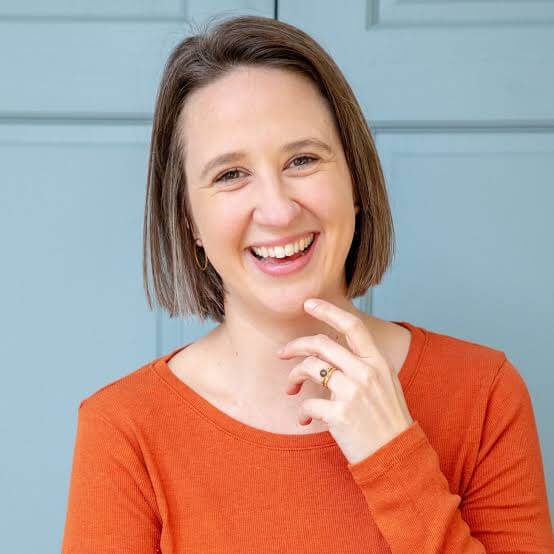
Alyssa Campbell is an emotional development expert, speaker, and author of Tiny Human, Big Emotions and a new book due out in September 2025, Big Kids, Bigger Feelings. She is also the CEO of Seed & Sew, an organization dedicated to giving parents, caregivers, and educators the tools to raise emotionally intelligent humans. With a master’s degree in early childhood education and years of hands-on experience, Alyssa brings both expertise and real-life stories to her work. She’s passionate about nervous system regulation, building connection through everyday interactions, and helping families thrive by shifting from managing behavior to nurturing relationships.
Community is everything!
Join our community Facebook groups:
Takeaways from the show
- Teens’ nervous systems are still developing regulation skills
- Rest is essential for emotional balance and resilience
- Family meetings create structure, trust, and connection
- Shift from talking about teens to talking with them
- Parents’ nervous systems directly impact teen regulation
- Validation builds safety and strengthens parent-teen relationships
- Curiosity opens doors when teens push parents away
- Modeling self-regulation teaches more than lectures ever will
- Shared language helps families navigate conflict and repair
- Intentional connection fosters long-term resilience in teenagers
Joyful Courage, to me, is showing up with openness and compassion, even when it feels hard. It’s choosing to lean into the messy, uncomfortable moments with kids instead of trying to control or avoid them. It’s trusting that if I stay grounded, curious, and connected, we’ll come through stronger. Joyful Courage is the reminder that bravery doesn’t have to be heavy — it can also be joyful.
Resources & Links from Today’s Episode
Book Mentioned:
-
Big Kids, Bigger Feelings by Alyssa Campbell — Available for pre-order or purchase here
Tools & Quizzes:
-
SEED Sensory Questionnaire (free) — seedquiz.com
-
Age-specific results for all nine sensory systems
-
Follow Alyssa Campbell:
-
Website: https://www.seedandsew.org/
-
Instagram: @seed.and.sow
Subscribe to the Podcast
We are here for you
Join the email list
Join our email list! Joyful Courage is so much more than a podcast! Joyful Courage is the adolescent brand here at Sproutable. We bring support and community to parents of tweens and teens. Not a parent of a teen or tween? No worries, click on the button to sign up to the email list specifically cultivated for you: Preschool, school-aged, nannies, and teachers. We are here for everyone who loves and cares for children.
I'm in!Classes & coaching
I know that you love listening every week AND I want to encourage you to dig deeper into the learning with me, INVEST in your parenting journey. Casey O'Roarty, the Joyful Courage podcast host, offers classes and private coaching. See our current offerings.
Transcription
[00:00:00] Casey O'Roarty: Welcome, welcome, welcome to the Joyful Courage Podcast. This is a place where parents of tweens and teens come to find inspiration, information, and encouragement in the messy terrain of adolescents this season of parenting. Is no joke. And while the details of what we're all moving through might be slightly different, we are indeed having a very collective experience.
[00:00:30] This is a space where we center building, relationship, nurturing life skills, and leaning into our own personal growth and man. The opportunities abound, right. My name is Casey Ody. I am a parent coach, positive discipline lead trainer, and captain of the adolescent ship over at Sprout Bowl. I'm also a speaker and a published author.
[00:00:53] I've been working with parents and families for over 20 years. And continue to navigate my own experience of being a mom with my two young adult kids. I'm so honored that you're here and listening. Please give back to the podcast by sharing it with friends or on social media rate and review us on Apple or Spotify.
[00:01:13] Word of mouth is how we grow. Thank you so, so much. Enjoy the show.
[00:01:23] All right. Hi friends. Welcome back to the Joyful Courage Podcast. I am so glad that you're here. Today's episode is so good. I'm so excited because my friend Alyssa is back, and those of you that find yourself. Navigating the waters of early adolescents, we're really gonna dig in and pay attention to everything that Alyssa has to say because this is her jam.
[00:01:51] Alyssa Blas Campbell, she is a bestselling author. She wrote the book, tiny Humans, big Emotions. She's Founder and CEO of Seed and Sow, and host of Voices of Your Village podcast. Alyssa has a master's degree in early childhood education and strives to change the way adults. Experience children's emotions so that we can respond with intention to raise emotionally intelligent humans.
[00:02:17] What a concept. Her new book is Big Kids, bigger Feelings, and it combines cutting edge research with real life experiences to provide actionable. Strategies that will resonate with everyone. Hi Alyssa. Welcome back to the podcast. Hello. Thanks for having me. Stoked to be here with you. So I'm so excited you wrote this new book.
[00:02:40] Tell me a little bit, you already kind of shared a little before we started, but the work that you're doing now is starting to move beyond just those early years and into. Elementary and early adolescence. Tell me about writing this book and why you're bringing it to the world.
[00:02:57] Alyssa Campbell: Totally. Yeah, so after we published Tiny Humans, we got so many folks who were like, this is so helpful.
[00:03:04] Also, why is my 9-year-old of teenager like, what is happening here and what do I do with them? And simultaneously we, in our work kind of behind the scenes at seed, we're working with a lot of elementary and middle school programs. And so as we're in these schools, we're doing all this work. We had a demand also from the teachers and from the parents at these schools we're like, they would buy tiny humans and do reads of it.
[00:03:32] And we're like, yeah, okay, cool. What happens when they're a little older? How do we do this as they get older? And so often what we have found is that the middle childhood years are left off the table. There's not a bunch of resources for them.
[00:03:45] Casey O'Roarty: Mm-hmm.
[00:03:46] Alyssa Campbell: We've got early childhood where it's like, here's all the parenting stuff.
[00:03:50] Right. It's in your space, it's in your face. You almost can't avoid it at this point. And then for the teenage years where we hear about how emotional they are, how draining they'll be, how hard they'll be, and. There's almost this like myth that in middle childhood things are just gonna be chill. Like you're just gonna coast.
[00:04:08] Yeah. It's the sweet spot for like, yeah, exactly. And then you do have an 8-year-old throwing their backpack on the ground and rolling their eyes at you and slamming the door or yelling in your face. And it's the like, okay, now what do I do with that? And that's what we wanted to dive into here. And big kids like, what does this look like?
[00:04:28] To raise emotionally intelligent humans and respond with intention in this season, in that five to 12-year-old time.
[00:04:35] Casey O'Roarty: Yeah. I love that you've created this resource. I have a lot of people that listen to my podcast or are diving into the positive discipline work that I do, and they're like, ah, I didn't set myself up well for this.
[00:04:47] And I feel like the work that you're doing with this book and you know, your work in schools really is that bridge. Because you're right, we get to the teen years and start reading the resources available, which, you know, I have mixed emotions about because I mean, it's alive in the early years. Like there's no formula.
[00:05:05] They're individuals, you gotta meet them where they're at. But it seems like in the literature for the teen years. People really wanna give a formula as if there's the right consequence or the right conversation, or the right whatever, that's going to ultimately solve your problems. Or had you been doing it right the whole time, then you wouldn't have any problems.
[00:05:28] But, and you and I have talked about this before, like there's no. Circumnavigating teen brain development like it is happening. Mm-hmm. Mm-hmm. And it's, and it's messy. It's a messy transition. And the messiness is not always an indication that something is wrong. Yeah. Sometimes it's just about being with the messiness in a way that your teen feels.
[00:05:52] Seen and attuned to and accepted for who they are and what they're moving through in this moment. For sure. And I think middle school, that middle school age is such prime. I mean, it's all prime territory, right? But like that middle school age, you're really getting this opportunity to pave the way into the teen years.
[00:06:14] Not because do it right during middle school into high school will feel so easy, but no. Do it in a way that allows for a true sense of emotional safety. Yes. And the teen years will be one where your kiddo we're increasing the likelihood that your kiddo's gonna come to you and talk to you. Right.
[00:06:32] Alyssa Campbell: Totally, and we're decreasing other likelihoods, like, yeah, that's what we're looking at here is, and in big kids, we give some examples of things in terms of ways to communicate with your kids, but what we talk about predominantly is how to foster a relationship and maintain a relationship of connection and safety.
[00:06:52] Love it. That I can't tell you. What your teen's gonna be interested in, or who their buddies are gonna be and what they will be interested in, and what challenges specifically are gonna come up for your specific child. And it's going to be different kid to kid. What we can do is help you notice what's coming up for yourself, how to navigate the US part of it, that.
[00:07:21] Up until you know they head to school. We've had control of a lot of their lives. Mm-hmm. They've been under our roof or they're in childcare, but they're coming home to us. They're not often going on play dates for prolonged periods of time or in afterschool activities, or asking to be. Peers without an adult present.
[00:07:44] And then that starts to emerge where they're looking at who am I outside of this household?
[00:07:50] Casey O'Roarty: Mm-hmm.
[00:07:51] Alyssa Campbell: What is my identity in this world? Who am I in this peer group? Who am I at school? Who am I in different interests in terms of clubs or sports or things like that? Who am I and what am I interested in? And in order to figure that out, they're gonna navigate a bunch of different pathways to find who am I.
[00:08:12] Casey O'Roarty: Mm-hmm.
[00:08:12] Alyssa Campbell: And what does it look like for me to show up in the world. And the most challenging part is the US piece of this, that along these pathways we're gonna have things that come up for us, like. I can't let them hang out with that kid. Or wait, what happened to my like precious, sweet child who just came home and is screaming at me and slamming the door?
[00:08:35] Mm-hmm. My kid is now shutting themselves in the room and they just wanna play a video game and not talk to me. And they used to come and tell me everything. Mm-hmm. Right. And so really looking at how do we maintain relationships of connection and safety without showing them the path they need to go down and instead.
[00:08:56] Walking alongside them as they navigate their pathways. Mm-hmm. Because there's gonna be a lot of different pathways that they're gonna try on for size.
[00:09:03] Casey O'Roarty: Yeah. I think that's so interesting that right there, because. We were so good when they were little and picking their favorite thing outta the dress up box and Okay.
[00:09:13] Obsessed with the Spider-Man costume or the princess dress or whatever for extended periods of time. There was never like. Oh God, are they ever, we can't let him or her be Superman for the rest of their life, and yet when they're in their adolescent years and they, you know, lean towards emo or lean towards whatever, they got a nose ring, they got whatever.
[00:09:36] You're like, what? They're gonna be like this forever. And we forget. Now this is a snapshot and I'm, I mean, I'm, I'm guilty of that too. I used to joke with Rowan, like as her hair color got darker, I, it was her hair color was her an indication of her mental health actually in our household. Like it just, once it was black, we were like, okay, yeah, thumbs up.
[00:09:58] And that's my story. Right? Yeah. I mean, there's so many kids that are wanting to just express themselves and I think what you said about. You know, really you're talking about individuating and, and who am I outside of this family? And sometimes to figure that out, I need to push up against what's important to you, what's interesting to you, and be completely different.
[00:10:19] And yeah, how we respond to that is everything, right? It's everything. And, you know, emotional. And I think this is the, the place where we really get to either foster, nurture, or. You know, or it's detrimental to this emotional safety that we get to hold and cultivate inside of this relationship. And we're talking about their vibe and what they're into.
[00:10:46] And like you mentioned, we can't control what their friends get into or what they decide to, you know, push up against experiment with. We hope that we can. So. As they get into these older teen years and are more exposed to, you know, all the things that we worry about and stay up at night about risky choices, you know, let's talk about why that emotional safety becomes so important for navigating that.
[00:11:15] Alyssa Campbell: There's really clear research around this that we all need one human that we can be vulnerable with. That we know can handle our hard stuff. It doesn't mean you're turning to that human with everything all the time. It doesn't mean that that human hears my little stuff all the time, too. What it means is that when the rubber meets the road, that you have one person that you can turn to to say, man, I'm really in it.
[00:11:50] I. Am having scary, hard thoughts or I'm doing this stuff and it doesn't feel good and I don't know how to get out of it, or I haven't done my homework once this year and nobody knows that except for my teachers and I don't know how to come back from this. And really just that when the rubber meets the road, when things get hard, that you have one person that you can turn to.
[00:12:17] And be vulnerable with, and that you know you're safe to do that. There's very clear research that that is crucial for our emotional wellbeing. If you have no one to turn to with your hard stuff, this is where we start to see people start to drown, go really inward. We'll see anxiety spikes, see depression, spike, and it doesn't mean.
[00:12:42] If you don't experience anxiety and depression, if you do have one of these people,
[00:12:46] Casey O'Roarty: mm-hmm.
[00:12:46] Alyssa Campbell: But the rates of anxiety and depression, if you don't, are astronomical. So what we're looking at here is when we can foster this emotional safety and connection, we reduce the likelihood of a kid experiencing anxiety and depression.
[00:13:05] We reduce the likelihood of extreme risky behaviors.
[00:13:09] Casey O'Roarty: Mm-hmm.
[00:13:10] Alyssa Campbell: Doesn't mean they're not gonna go to the party and drink. Mm-hmm. But can they call you and say, I screwed up.
[00:13:16] Casey O'Roarty: Mm-hmm.
[00:13:16] Alyssa Campbell: I'm here and Noah wasn't supposed to be here and I don't have a ride home.
[00:13:21] Casey O'Roarty: Mm-hmm.
[00:13:23] Alyssa Campbell: My goal isn't that kids are going to be obedient and compliant and not take risk and not experience hard things.
[00:13:32] My goal is that when they do, there's a line for them where they say, I don't think I can cross this line. Yeah. And I have a person to turn to for that. When we're looking at fostering that, what it means is that kids know. That A, we can handle their hard stuff. It's not gonna be too overwhelming for us.
[00:13:54] It's not gonna spike our anxiety that it doesn't mean I'm gonna be jazzed and I will tell my children all the time, yeah, I might feel frustrated, I might feel disappointed. I'm allowed to feel those things. I'm okay to feel those things and you are safe if I feel those things. Yeah. I have tools for my frustration and my disappointment, and there's not a single thing on the planet.
[00:14:18] That you could do that would make me love you more or less. More pointing to like our perfectionist overachievers who are like, okay, what if I had perfect grades? What if I was a star athlete? What if I was doing all these things correctly? I. Am I more lovable? Mm-hmm. I want them to know that no, you could be failing every class and not involved in everything, anything.
[00:14:42] And I'm gonna love you just as much as if you were getting A's in every class and you're president of student council and whatever. There's not a single thing you can do that would change my love for you. I, my goal here is to make sure that you have everything you need. To succeed at whatever you wanna do that if what you really wanna do is go be a biochemist, that you have all the tools you need to be successful at getting into the program you wanna get into.
[00:15:13] Mm-hmm. And succeeding in the workplace in the way that you want to, or. If what you want is to go and be in the service, great. What do you need to be successful at that? And my job is to make sure that you have everything you need in this world to be successful at whatever it is is gonna be your path.
[00:15:36] It's not to design your path for you. It's not to make sure that you're going down the path. I want you to go down. It's to really look at what fires you up. My husband is. So much better at this than I am. Like for me, it takes a lot more intention. I, he is so good at meeting our kids in their interests and being curious about it and like diving into their interests with them.
[00:16:06] I'm like, there are a billion things I'd rather do than play Dungeons and Dragons, right? Like d and d, just like. It's literally a billion things I'd rather do. The idea of spending my time doing that is so hard for me to wrap my head around and for my husband. It also doesn't fire him up to play the game, but it fires him up to be in our children's world in a way that they feel fired up.
[00:16:38] To see them fired up and excited and interested. I have to be way more intentional about that. I am someone who, I grew up in a household where there was a path. Me too. This was what you were going to
[00:16:53] Casey O'Roarty: do. Yeah.
[00:16:54] Alyssa Campbell: Yeah. You were gonna break. It's hard
[00:16:55] Casey O'Roarty: to, it's hard to release that narratives. Hard break. Yeah.
[00:16:58] Mm-hmm. My, my kids are like, well, we're gonna help you. Yeah. Hundred percent. My daughter. Anyway, they're so good
[00:17:03] Alyssa Campbell: at
[00:17:03] Casey O'Roarty: it.
[00:17:04] Alyssa Campbell: Oh, they're so good at it. Right. And I, I have to really work hard that my husband grew up in a bit of a more non-traditional household, and there were multiple path options. Mm-hmm. It was not the same culture.
[00:17:20] And now I see how, how that serves him as a parent. And I'm jealous. Yeah. I'm like, oh gosh, that's so nice that you can just be here for the connection. And that's enough for you. Yeah. And you're like, yeah, they're gonna be fine. I'm like, God, but what if they're not? Thanks for the emotional labor.
[00:17:39] Casey O'Roarty: Yeah.
[00:17:39] Alyssa Campbell: No, just kidding.
[00:17:41] Casey O'Roarty: Legit,
[00:17:42] Alyssa Campbell: uh, legit. But when we're looking at this in terms of the, like, why does it matter? It's, it, it's, there's unshakeable data here. Mm-hmm. That having that person that you can turn to where you're like, man, I dropped the ball. And you're not gonna be in trouble, you're not gonna be grounded, you're not gonna be punished.
[00:18:02] You're gonna have someone that says. Yeah. Let me help you figure this out. Thanks for being honest
[00:18:07] Casey O'Roarty: with me. Yeah.
[00:18:16] Well, and I will say on that note, it's also just for you listeners who are like, oh, I've got a long way to go with that. I think it's important to remember that there are endless opportunities of low hanging fruit. Mm-hmm. Where you can show up really well and have your kids back. Take advantage of those because they're also, I'm thinking about my own experience.
[00:18:39] There's two different instances that I had with my son where he, it was revealed, or, well, one time it was his revelation and another time I like kind of, he was caught mm-hmm. Where I lost my shit and I lost my shit for about a minute, and then I was like, okay. Now we're gonna move into problem solving mode.
[00:19:01] Right. Like, I see you, this sucks. And I think like on one, in at least one occasion, he recently, he was like, no, actually you freaking. I was like, sorry. I totally freaked out. Like I did not keep it together. And he was like, actually that kind of landed how big of a mistake I made. Yeah. With your response because it was so out of the ordinary for me.
[00:19:22] Sure. Right. And then the other one, you know, he already knew that what was going on was a big deal and I just had to, so I think we also kind of create, you know, they know us by what we do most of the time. So if we can work on those low hanging fruit moments, and I wanna talk about specifically. That idea of, oh my gosh, I haven't done any of my schoolwork and the only one that knows is my teacher and now the teacher's calling the house.
[00:19:51] Mm-hmm. So maybe it's not the child. 'cause I think it's, there's something about the child coming to us to reveal. Sure. That so vulnerable and hard it right. It, it offers for me at least. Somewhat easier to be like, okay, totally. You came to me. Thank you for that. When it's, I get a phone call or I catch you in, in the act, you've been cop, right?
[00:20:12] Yeah. Then I'm like, what the, what the fuck, dude? You know, it's harder. Yeah. Not only
[00:20:17] Alyssa Campbell: you're doing this, but you're also lying and you know you're lying. Right? How
[00:20:19] Casey O'Roarty: dare you? Mm-hmm. How dare you lie? Mm-hmm. Um, and so like for the instance of a, of a teacher, you know, and I, I'm thinking about a particular, you know, some clients that I've worked with, with middle school kids where we have way too much access too.
[00:20:33] Totally. We have too much access to like everything that they're doing and not doing at school. But you know that parent who realizes by call or checking the portal or whatever, that their kiddo is way behind. So what could it sound like? Yeah. As the parent, you know, to be in that space of, okay, this is an opportunity for me to show up in a way that.
[00:20:56] My kiddo knows I have their back while also like, Hey, this is something we've gotta work out. Tell me what's going on. What does it look like?
[00:21:04] Alyssa Campbell: I wanna answer that and I wanna comment on something where you, that I think was really important that you noted that. You lost your shit for a minute and that hit for him.
[00:21:15] We are not robots.
[00:21:17] Casey O'Roarty: Mm-hmm.
[00:21:17] Alyssa Campbell: We have emotions. We are going to react. We should. It is actually quite confusing for the nervous system if I am saying something like this, but the words that I'm saying are actually. From a place of frustration, and I'm like annoyed with you and I'm mad at you, but my tone doesn't sound like I'm mad at you.
[00:21:41] Our nervous system, part of it, one of our sensory systems is called Neuro Perceptive. Our neuro perceptive system is designed to keep us safe. It does this predominantly through nonverbal communication, so through your tone, through your body language, it's scanning the environment. If you walk into a room and somebody's been in conflict with somebody else, even if they're not in conflict anymore, you can like feel that energy in this space.
[00:22:05] That's your interceptive sense. It's reading the space all the time. It's really hard for your neuro perceptive sense to do its job if your tone doesn't match the words you're saying. In the same way that if you ask me, how are you doing? And I say, I'm fine, you know, I'm not fine. Yeah. Right? Yeah. And so with our kids, if they're doing something that is scary, that's not safe, that we're pissed about.
[00:22:34] If we try to just use a super calm tone in that moment and inside our alarm systems going off, it doesn't hit for them. Their neuro receptive system actually is spending time saying like, what's going on here? It's confusion for your neuro receptive system. Now it doesn't mean like scream at your kids all the time, but also don't focus on just being a robot.
[00:22:57] It's okay to have a tone that is stern when you mean like this is something serious. Mm-hmm. Or to yell and say like, oh man. I was so frustrated and overwhelmed earlier and I yelled, and I'm sorry that I lost my Cool. I'm gonna try and calm so that I can be kind to you and I'm still working on when I'm overwhelmed and here's how it's coming out, right?
[00:23:20] Mm-hmm. Like it's okay to lose your shit.
[00:23:22] Casey O'Roarty: Yeah.
[00:23:23] Alyssa Campbell: We're not robots and we can't be, and we shouldn't
[00:23:26] Casey O'Roarty: be. It's just like a little plug for that and I love that. Thank you so much. And I just, on that plug, I think I shared this before on the pod, but there was a another instance. Where I literally said to my child, like, I'm gonna pause and say, I don't want you to be confused about how calm I am right now, because I am completely freaked out that you made this choice.
[00:23:49] It's terrifying to me and not something that I hope that you ever choose to do again. So I, there was something for me. To, it was important to me in that moment. Yeah. To recognize like, hold on, am am I giving the wrong message because I am keeping it together? Yeah. Let me just double down on the fact that this is not okay.
[00:24:10] Alyssa Campbell: Yeah. You know?
[00:24:11] Casey O'Roarty: Yeah.
[00:24:11] Alyssa Campbell: I love that. Yeah. Like that is so clear from a nervous system perspective, it's so clear for the person receiving that message. Mm-hmm. And so helpful. I when we're looking at like the teacher, right? They call or you go on the portal and you now see. Now when we go in and talk to the kid, if we go in and we're yelling and we're screaming, what happens is that if I come in and I'm like, this, their nervous system.
[00:24:40] Goes into a either fight or a protective state. So they're either going to kind of shut down or run away from you, or they're gonna go into fight mode, or they're gonna be like, no, I didn't do that. I've been doing my homework. Because their nervous system says, oh wow, this person is not safe. Do not let your guard down with them.
[00:24:57] Don't be vulnerable with them. This person's here to fight you. They're in fight mode. It's neurobiological. We are not in control of that reaction. Right. For that kid's. Not in control of that reaction. If you come in and you're in this like power over, I'm pissed at you, I'm gonna yell at you. If you think of like animals, exactly.
[00:25:17] If you think of like animals in the wild, if an animal's in fight mode and they come up to another animal. The other animal's either gonna run away and hide or fight back, and that's what's happening here. So after you get the call from the teacher or you pop on that portal and you see it, step one is, notice what's coming up for you.
[00:25:37] Calm your own nervous system first of like, okay. What am I really afraid of here? They haven't been doing their homework all year. I'm afraid they're gonna fail this class. They're not gonna graduate high school. They're gonna live in my basement for the rest of their life. They're not gonna have like friends or a job or whatever.
[00:25:52] Like what we're so good at jumping ahead to like, now they're 35, and have a very different life than I imagined for them. And so being able to recognize that, right, of like, what is coming up for me here? Mm-hmm. What's my fear? And then how can I access curiosity? Yes. What do I need to actually ask them what's going on and be able to connect with them from a place of curiosity?
[00:26:18] Think of this in co-parenting too, where like it's so easy for me to step in and try and convince my husband of doing something or responding a certain way. It's so much harder for me to come and be. I wonder why he is responding the way he's responding, and truly be open to what he's gonna say. Mm-hmm.
[00:26:35] Not to mount a counter argument. And so when we go in to talk to this kid and I say, Hey, I just got a call from your teacher. I'm not mad at you and you're not in trouble. I wanna figure out what's going on so I can help you with this. Mm-hmm. And right out the gates, like you'll notice my tone is regulated.
[00:26:54] I'm gonna drop my body language. If there's like a chair I can sit in or something, I'm gonna sit down or clap on the bed. Really showing that like, I am not here to fight you. I'm not here to power over you. I'm not here to punish you. I'm here to be curious because when we can be curious about this, it's a game changer.
[00:27:14] We have a story about this in big kids of a kid who hadn't been doing their homework and this exact thing they like are found, it's found out, uh, not by the kids saying, I haven't been, been my homework, but by the teacher. Right. And what they end up finding out is that when they come home from school every day.
[00:27:32] To do their homework. They had a system in place where the kids would come in and drop their stuff down and dive on into their homework before they could go and play and do other things. And this kid's fried from the day. And furthermore, this kiddo is a sensory sensitive human who is like masking a lot of the day.
[00:27:53] They would rather like. Not understand what's happening in the school day, then face the potential embarrassment of saying like, I didn't get that.
[00:28:03] Casey O'Roarty: Mm-hmm.
[00:28:04] And
[00:28:05] Casey O'Roarty: that's real. Like I, can we just pause? Pause there. That is real for so many of our kids, and I think that gets really dismissed. By adults saying like, no, you need to, if you don't get it, you need to talk to the teacher.
[00:28:17] You need.
[00:28:18] Alyssa Campbell: I'm like, let me put you in a boardroom of a bunch of people who are really confident and see like they're engaging in the conversation and they get it. Yeah, and have you raise your hand and say, I don't understand any of this.
[00:28:28] Casey O'Roarty: It takes a really specific personality. I remember being a part of this coaching and facilitation program where I was one of the coaches.
[00:28:35] Alyssa Campbell: Uh huh
[00:28:35] Casey O'Roarty: And the leaders were so brilliant and so like, just super brainy. And they would start going into all this stuff and I would raise my hand and say, can you say what you just said in a different way? And later on in the day, I would have multiple people come up to me and say, oh my God, thank you so much for mm-hmm.
[00:28:56] Asking them to re-say that because I didn't get it either. Like even as adults. Yeah, the idea of saving face or, you know, not being perceived in a way that we think we're gonna be perceived if we don't get something is super real. And yet we're like, you know, I remember, and with my daughter when she was in ninth grade, anxiety was really in the room with her.
[00:29:18] And I would say that, I would say like, well, you gotta, you know, just can't you just go to your teacher? And sh her biggest fear was one, you know, as many of us at that age believe. Everybody's looking at me. Totally. Right. And two, she's like the, the worst thing that could happen would be that if she got emotional and was witnessed.
[00:29:39] Being totally like that. And so she just stayed in the back of the class, right? Yeah. And, yep. And my like, what? I don't get it. Like, I don't, of course I don't get it. 'cause I, my personality is totally different and I'm like, look at me. Like, seriously, look at me. You know? Like, really? I don't mind if you look at me, right?
[00:29:57] You wanna see me cry, I'll cry. I get emotional. Yeah. I like it. It's like energetic, you know? It's energizing and I'm passionate. Yeah. And to her other people, it's like, this is the worst possible thing. So I think. Totally what I'm hearing you say, and I love that invitation as well to take this work and turn it towards our partners because there's a lot of frustration in the parent co-parenting relationship because we're not willing to remember, like we're all having an emotional experience here.
[00:30:27] You know, our histories, our conditioning, our beliefs are being tapped on by these young people in our lives. So. Yes. Thank you for that. Yeah, I really appreciate that. But
[00:30:38] Alyssa Campbell: just really getting curious is so key. Mm-hmm. And for them to truly know you're not in trouble. And
[00:30:44] Casey O'Roarty: Yeah.
[00:30:44] Alyssa Campbell: Like say, if you're gonna say that, mean it.
[00:30:46] Yeah, exactly. You can only say it if you mean it. Yeah. Because if you don't mean it, if they're going to be in trouble afterward, then it's empty. Yeah. And then they know like, not only is it not true, but also I can't trust you. Right. Because this is a place where
[00:31:02] Casey O'Roarty: they get to collect evidence. Exactly, exactly.
[00:31:05] This is their little stock, their little backpack of evidence. Exactly. Do you really have my back or not? Yeah. And
[00:31:11] Alyssa Campbell: it's also sometimes appropriate to share with them like. Here's what's going on. I am nervous that if you don't do your homework, here's what's going to happen. That you won't pass this class.
[00:31:22] If you don't pass this class, that you won't pass this grade. You'll have to do it again and what that'll mean for you or feel like for you. And so I wanna figure out a way to help you be successful here. Yeah. And. To be honest, the way that school's set up is predominantly in most schools for one type of learner.
[00:31:38] Mm-hmm. And there's a lot of people who probably aren't understanding what's being said by the teacher or aren't getting it the way it's being taught, or who accessing homework at the end of the day feels like I have nothing left to give. I've given everything at school and I have nothing left to give.
[00:31:54] You're not alone in this and I wanna figure out what's gonna be helpful for you to be the most successful. I don't need you to get an A in this class. You don't need you to get an A in this class. Yeah. That's not what it's about. I wanna help you so that you can learn the most, that you can learn and continue to move through school in a way that's gonna help you access the things you want in life.
[00:32:23] Casey O'Roarty: It is so interesting how there's all these opportunities, whether it's sports or school or. Friend groups, like the opportunities to grow are not necessarily what's on the surface. Like, I mean, I'm sure my listeners are tired of me talking about my son and his, um, online accelerated calculus class that he's doing this summer.
[00:32:46] Why he signed up for it. I do not know, but he is struggling and man, his nervous system, it is becoming apparent that. This is a place of growth for him. Yeah, and that's what I told him. I said, listen, whether or not you pass the class is, that's one thing, but you have an opportunity here to learn to be with deep frustration and deep discouragement in a way.
[00:33:09] That is helpful and not hurtful because this, you know, looking at his com, his, his, his notebook that he literally tore apart. I was like, whoa, dude. Um, like clearly there is room for growth in your tolerance Yeah. Of discouragement and frustration and like, that is a gift because guess what? You know, feeling for the rest of your life, maybe.
[00:33:35] Oh, buddy. Yeah. Like life is unfolds in mysterious and sometimes deeply discouraging ways, and you get to be with it, you know? You get to decide how you be with it. Yeah, yeah, yeah. Well,
[00:33:47] Alyssa Campbell: and one of the things we talk about in this book is how to increase frustration tolerance, the ability to be with hard things, with hard emotions.
[00:33:54] Yeah. It really looks at how do we best resource the nervous system to be able to navigate that, right? That, yeah. When I look at seasons where I am not sleeping or where I am not getting the right movement for my body, or I don't feel connected or whatever the, when I'm in those seasons, I have less capacity and bandwidth for the bullshit for the hard stuff.
[00:34:18] Yeah. And so when we're looking at this, we, we outline what we call the facts. F-A-C-T-S, and it's where we wanna start to look at, okay, how are we best resourcing the nervous system before you're gonna ask him to do homework? Mm-hmm. Before we're gonna have a tough conversation, before we're gonna navigate conflict resolution or problem solving.
[00:34:41] Is the nervous system in a place to do that? Is really what we're looking at here. So we have food. When was the last time? Like are they hangry, right?
[00:34:50] Casey O'Roarty: Mm-hmm.
[00:34:50] Alyssa Campbell: We were just on vacation and we had like all gone and gotten like a donut run and then we went to the beach and then everybody kids aged one to.
[00:35:04] 12 and then all the adult, everyone was just like grumpy. And at one point my husband was like, oh, but those donuts taste so good going down, they're so, and like have the donut. But all of a sudden my husband was like, guys, all we've eaten for breakfast was donuts, right? Yeah. Like we're all on a sugar crash and like have the donut.
[00:35:21] And also I was like, yeah, let me maybe go grab some yogurt or some bread and we can make sandwiches and really give our bodies something else to work with. So for us, food isn't. Only have certain things. It's where are we are, are we on that sugar crash or sugar high? Are we just hangry? And it's not the time, right?
[00:35:41] They come home from school. That was one of the, uh, stories we, we shared in the book. These are all stories we gathered from parents and its families we've worked with or families, uh, that shared their stories with us and. One of them was this kid was coming home and trying to do schoolwork and just needed like a snack and a moment of connection before she could access schoolwork.
[00:36:04] That the battle totally shifted when she had some food and connection first, and it wasn't a big deal. It was like five minutes time. But having that first before moving into schooler was so crucial for her. So we have food, we have activity that's looking at what's the right type of activity for your nervous system.
[00:36:25] And we go deep into that in this book, looking at all nine sensory systems and that, for instance, for me, I'm proprioceptive seeking. I love big body play. I'm like, let me wear weighted vest or have a kid sit in my lap or let me give a kid a piggyback ride if I can. Or play a game where we're like running and moving and jumping like that nourishes my body.
[00:36:48] My husband sits in an office chair that swivels because he likes the type of input called vestibular input where he's moving his head side to side. Mm-hmm. Or he is like a swing person. And so looking at like what. When was the last time you had access to activity that nourishes your body? C is connect.
[00:37:07] I'm gonna pause you. Yeah. In
[00:37:08] Casey O'Roarty: the book, do you s 'cause uh, and listeners, can we just all acknowledge how dreamy and Sy Alyssa is? Because this is what I love about you. You're like, let me tell you about the nine. Blah, blah, blah. The brain, the nervous system of it. I'm like, okay, tell me how do we, how do we know for our, yeah, like do you, does, do you break that down in the book too?
[00:37:30] Yep. Are there just kind so we
[00:37:30] Alyssa Campbell: break it down and then we also have a QR code placed throughout the book that leads to it. I'll give it to you right now. It's seed quiz.com is with a QR code. Go through. It's a free questionnaire. We worked with occupational therapists to put it together. Love it. You can take it for any age group, and it'll give you age specific questions, age specific results.
[00:37:48] It'll look at. All nine of the census, we often hear of our first five sight, sound, taste, touch. Right now. There are four others that we dive into there and we help you understand what they are. Where this human, whether it's your child, you is on the spectrum of sensitive to this or seeking this for regulation.
[00:38:06] So is it something that drains you or recharges you? And it's different for all of us. I'll give you an example of, uh, sound that my daughter is sound seeking. So she's like, I want. Background music on, I wanna have like the TV running in the background is good for her. She loves to be in like a group of people where there's just like noise buzzing that is so regulating for her.
[00:38:30] In fact, silence and stillness is dysregulating for her.
[00:38:34] Casey O'Roarty: Mm-hmm. My son
[00:38:34] Alyssa Campbell: is sound sensitive, so he's like, in order for my brain to function, I need a break from sound. And so helping us understand like. How does your nervous system function? Then lets us know what types of activities are best for you as an individual, what are going to be regulating for you, and then knowing what's gonna be draining.
[00:38:54] So seed quiz.com. Thank you. And you can take it. Yeah, totally. You can take it as many times as you want. It's free. There's a paid version that's available that has like a portal of more in depth resources. We predominantly use the paid version for schools that we work with. Got it. Um, where their classrooms are doing it, but it's available to families if you wanted that.
[00:39:12] And there's QR codes in the book that like link out, uh, to that questionnaire to help you learn that. And then we have connection for the facts connection, really looking at how does this child receive connection that. We, again, my son and daughter are two totally different humans. My daughter loves that, like busyness, the like put me in a group of people and she leaves and she feels so fulfilled.
[00:39:37] Casey O'Roarty: Mm-hmm.
[00:39:38] Alyssa Campbell: My son, if I'm like, oh, I'm gonna go connect with him if I'm going to like the science museum or going to an activity with. It's actually not how he receives connection. He might still enjoy the activity and then we get home and he's like, mom, watch me do this, mom. Mom, can you come see this? I'm like, God, we just spent two hours together at a science museum.
[00:39:57] Because for him, he receives connection when I'm not paying attention to anything else and it. Actually for him, five minutes of my undivided attention where he just gets to hang out with me. Especially if it's like led by him. It's an activity he likes and he is showing me something. You're teaching me something you're telling me about.
[00:40:16] Something is way more fulfilling for him than two hours at the science museum.
[00:40:21] Casey O'Roarty: So what I love about this, when I think, you know, and bringing this into kind of this early adolescent years where there is that natural pull away, I think that a lot of parents hold connection as one thing. Mm-hmm. That it should look one way.
[00:40:36] And what I'm hearing you talk about is actually, and I actually just experienced this myself. 'cause I'm getting ready for Ian to go back to college and I'm like, oh God, the whole summer's gone by. We haven't done anything, just the two of us together. Mm-hmm. And I got kind of panicky and a little desperate and he was like, whatcha talking about like, we've spent so much time together.
[00:40:55] And to him, he like there is sitting down at the table while we're eating breakfast or. You know, flopping on the couch and watching a movie. Like it doesn't have to be this grand, even though I would love to, in my mind, like, let's have a weekend away. Yeah. Just the two of us. He is like, hmm, let's not, not so much.
[00:41:12] That sounds like a lot of time together. Um, but I think that it's a great reminder that there's lots of different ways to nurture. Connection and all sorts of things come into what that can look like. And I think, yeah, this is just, to me, I'm hearing you, it's a reminder to me that it, it let go of this, like whatever your ideal vision of it this is, and remember like there's lots of ways, and again, all these different ways are offering opportunities for that low hanging fruit of how are you showing up, you know?
[00:41:48] It can be texting, right? Like
[00:41:49] Alyssa Campbell: you Yeah. It doesn't have to be a like big grand gesture. It could be that we're texting back and forth. Yeah. And that's enough for some kids. For some kids actually. That's how they will feel the most connected. Yeah. Is that they can. Kind of have time and space and not be processing your face and your reaction to things and be able to share things with you in a way that feels safe for them.
[00:42:12] And it could be journaling back and forth. It can be writing, but it can be shooting a text back and forth. Mm-hmm. Mm-hmm. And yes, and it's really looking at like, how does this kid receive connection? And so that's c We have T is two now. And this is when was the last time? I'm sure you felt this as a, as a mom at some point we were just like, I just wanna lay in a dark room where no one's talking to me and touching me and asking me for things, and I can just like be, and it's silent for a minute.
[00:42:40] Casey O'Roarty: Mm-hmm. Mm-hmm.
[00:42:41] Alyssa Campbell: When was the last time they just had a break from stimuli where they were just
[00:42:46] Casey O'Roarty: existing and Oh my gosh. Of course, all I'm thinking about is. Put the damn phone down. Sure. Right, because tuning out is not laying on your bed and scrolling. No
[00:43:00] Alyssa Campbell: Instagram. No. Nope. It can be reading, it can be walking, it can be a lot of things, but reducing stimuli is what we're looking for here.
[00:43:10] Yeah, yeah, yeah. Love it. And so it, and it, it can be a minute, like one minute is so good for your nervous system that it doesn't have to be like, we're gonna have 30 minutes of phone free time. If that feels too big right now, it can be a minute. Love it. And so really looking at like starting small there and then sleep, just like how close are we to sleep?
[00:43:31] One of my like least favorite things, I was just at a wedding and people were like going around and sharing advice, which like whatever. But uh,
[00:43:39] Casey O'Roarty: and one of the things, okay, here's my podcast, everyone trying not to be awkward, but I do have a podcast.
[00:43:47] Alyssa Campbell: And they were sharing like not going to bed angry.
[00:43:51] Casey O'Roarty: Yeah,
[00:43:52] Alyssa Campbell: and I was like, yeah, no.
[00:43:54] Sometimes go to bed angry because go to bed. Sometimes you're not really angry, you're just tired. Yeah. Yeah. Yeah. And same with our kids, especially in times of transition or change when anything's new, starting a new school, new classroom, or just like new friendship stuff happening, et cetera, that it's like they're just tired.
[00:44:15] Their brain's been working all day long and man, there are days where I get to the end of the day and I'm like, could somebody brush my teeth and put me to bed? Or those nights where I'm like. Yeah, we're doing takeout for dinner because we don't have the capacity or energy for more, and recognizing that that's our kids too.
[00:44:32] Mm-hmm. That they're also hitting those places where they need their version of We're doing takeout for dinner. Yeah. And we're gonna lay and watch a movie. We're gonna veg, we're gonna chill, and we're just gonna then go to sleep. Yeah.
[00:44:47] Casey O'Roarty: You know? So Food activity connection, tune out. Sleep. Tune out. Tune out.
[00:44:55] I love that. And sleep. Awesome. Yeah. I love this. And that is
[00:44:59] Alyssa Campbell: like how we can set the nervous system up for success, right? But then we're gonna dive into those harder things that our body and brain are gonna have to do of like problem solving, conflict res, any tough conversations. Like, I'm not gonna have a hangry kid and be like, okay, now we're gonna have this really important talk.
[00:45:17] Casey O'Roarty: Yeah. Yeah. Well, and it's not a secret like listeners. You know, those of you that are like, okay, great, how do I get my kid to get on board? And, and I'm thinking family meetings are a great place to say, oh you guys, I listened to this podcast today, and they were talking about these five things and like normalize it, bringing it up, bring it up in conversation.
[00:45:37] Have it be a part of family culture. Right? Yeah. I think that we, we don't really recognize that. I mean, it's simple. Not always easy. To just, this is what we do in our family, or this is what we talk about in our family. Like it's, it's doable and it requires an uplevel in intentionality, which I really love, Alyssa.
[00:45:59] I mean, we made it through like two of my questions, which means I'm sorry. No, no. Which means this is what I wanna do. I'm gonna send you another link for scheduling and let's do a part two because I, yeah. I'm just reminding myself, I'm being reminded of how much I love talking to you about this stuff and your book is such a powerful resource.
[00:46:18] So, listeners just know in a couple weeks, Alyssa's coming back and we're gonna talk about some of these other things. 'cause I really wanna talk about, you know, how easy it is to slide into feeling like our bigger kids should know better or should be better at controlling themselves or making right choices and we forget.
[00:46:40] There's still development happening. Um, and they're human. And they're human just like we are. And, and just those big emotions in real life, like I just have so much more that I wanna talk to you about. So stay tuned for part two. But before we go today,
[00:46:56] Alyssa Campbell: tell us, can I add one thing, do it before we it do the wrap up.
[00:46:59] I loved your family meeting note and also want to acknowledge that. It for a lot of us didn't grow, we didn't grow up in a culture like this. Yeah. And it can feel uncomfortable to even be like, we're gonna have a family meeting, we're gonna talk about stuff. And you can name that of like, this is, this like, feels weird, I guess to say, or awkward.
[00:47:23] And I learn the thing and I wanna share it. And we, we do a lot of talking about kids and not a lot of talking to kids. Yeah. And. I wanna shift that, that instead of just talking about them and what's going on for them, we say, I want to talk to you about this stuff. Yes. I think it's a sign of respect for kids to say, I trust that you can handle these types of conversations and that like these words aren't too big for you, sort of thing.
[00:47:52] And yeah. Gosh, a hundred percent. 4-year-old who's saying nervous system. Yeah. Like it is possible if we just trust that they can handle this Totally. And we talk to them and not just about them.
[00:48:04] Casey O'Roarty: Yes, yes, yes, yes, yes. It's so interesting being on coaching calls with clients and they're like, well, how do I.
[00:48:10] Do this, or how do I get them to blah, blah, blah. And it's, and I'm always like, Hey, go to the source. Like, you don't have to have all the answers. Mm-hmm. Go to the source and say, you know, what's gonna be helpful to you? Right. Mm-hmm. In this situation. So I love that, talking to them rather than about them.
[00:48:29] Tell us where we can find you. Follow your work. Yeah. And find your book. Totally. Which this, this show may or may not be. In line with your publication date, so I'm sure there's also a presale going on.
[00:48:40] Alyssa Campbell: Yeah, a hundred percent. Okay. Yep. So, uh, you can pre-order or order. It publishes September 16th. Okay. And big kids, bigger Feelings is the book.
[00:48:49] Wherever books are sold. If you're in the pre-order season and you go to season, so.org/book, you can support an independent bookstore and get a signed copy for the exact same price. Uh, and. If, uh, you're also in the pre-order season, there are bonuses available at that time as well. Also at that same space, uh, if it's after September 16th, I also read the audio book if that's your jam.
[00:49:14] If you're an audio person, you have a great voice. Thank you. I like reading my books. It's fun. Uh, and yeah, and then seed, so.org is like our mothership for all this stuff. So SEWC do and so on Instagram as well.
[00:49:31] Casey O'Roarty: Awesome. Awesome. Yay. Well, I'm gonna save my, what is joyful Courage mean to you? Question four, part two.
[00:49:38] Thank you so much for hanging out with me and thank you for all the work that you do in the world. It's so important and useful, which I really appreciate. Thank you. Yeah, and human. Thank you.
[00:49:48] Alyssa Campbell: Yeah. Always being in human. Thanks.
[00:49:56] Casey O'Roarty: Thank you so much for listening. Thank you to my Sprout partners. Julietta and Alana, thank you Danielle, for supporting with the show notes as well as Chris Mann and the team at Pod Shaper for all the support with getting the show out there and making it sound good. As I mentioned, sharing is caring. If you're willing to pass on this episode to others or take a few minutes to rate and review the show on Apple Podcasts or Spotify, it helps other parents find this useful content.
[00:50:23] Be sure to check out what we have going on for parents of kids of all ages. And sign up for our newsletter to stay [email protected]. I see you doing all the things. I believe in you. See you next time.