


 Share
SharePositive Discipline for Teenagers: Mistakes & Motivation

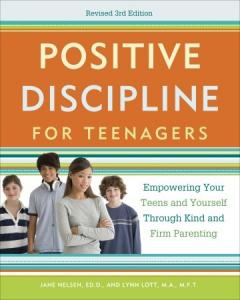
Welcome back to our Positive Discipline for Teenagers series! I’m continuing this deep dive into the book Positive Discipline for Teenagers by Jane Nelsen and Lynn Lott, in tandem with the Joyful Courage podcast. This week, we’re diving into chapters 4, 5, and 6 — these pack a powerful mindset shift.
We’re talking about mistakes (and why they’re actually good), what really motivates teens, and how to communicate in a way that your teenager might actually hear (and maybe even respond to). These chapters are where theory meets practice — and where we bump up against the way we were parented. Let’s get into it.
Chapter 4: How Can Mistakes Be Wonderful Opportunities to Learn?
This chapter opens with a core Positive Discipline principle: Mistakes are wonderful opportunities to learn. Sounds great in theory — but if you grew up in a household where mistakes were met with punishment, shame, or humiliation (hello, many of us Gen Xers), this idea can be hard to wrap your head around.
Many of us were raised to believe that making a mistake meant we were bad, and the consequence was meant to “teach us a lesson” — fast, harsh, and often painful. There wasn’t much room for reflection or repair. And definitely no curiosity. Positive Discipline flips that script. Instead of punishment, we focus on teaching and learning. Instead of misbehavior, we start thinking of these moments as mistaken decisions — a reframe that helps us respond with curiosity instead of control.
Here’s why that language shift matters:
- “Misbehavior” feels intentional and disrespectful. It triggers us.
- “Mistake” suggests a learning opportunity. It keeps us grounded and solution-focused.
The chapter encourages us to take a breath and ask, “What can be learned here?” instead of “How can I get them to never do this again?”
Two practical tools show up here:
- Curiosity: Asking open-ended questions helps teens reflect on their actions and develop their own internal compass. (And no, it’s not about getting the perfect answer. It’s about planting seeds.)
- Making Amends: Owning your behavior, taking responsibility, and repairing the harm. This goes for us too, not just our kids. (Modeling for the win!)
This chapter reminds us: mistakes aren’t failures — they’re the curriculum.
Chapter 5: How Do You Motivate Teens?
Ah, the million-dollar question. This chapter breaks down the big difference between external control (how many of us were raised) and internal motivation (what we’re aiming for with Positive Discipline).
Here’s the contrast:
| Traditional Approach | Positive Discipline Approach |
| “Do it or else.” | “Let’s figure it out together.” |
| Carrots and sticks | Intrinsic motivation |
| Fear of consequences | Respect, connection, and encouragement |
| Control through authority | Collaboration and shared problem-solving |
The truth is, many parents asking “How do I motivate my teen?” are really asking “How do I get them to do what I want?” But Positive Discipline nudges us toward something deeper —
helping teens want to show up because they feel seen, respected, and capable.
Tools from this chapter:
- Encouragement over praise — instead of “You’re so smart,” try “I see how much effort you put in.”
- Humor & levity — don’t underestimate the power of lightening up. Humor can be a great tool for connection.
- Making deals & agreements — collaborate on expectations and revise as needed. Agreements aren’t stone tablets — they’re living documents.
Bottom line? People rise for the folks who see them. If your teen feels appreciated and understood, they’re way more likely to engage with you — even when it’s your agenda.
Chapter 6: Does Your Teen Hear Anything You Say?
If you’ve ever wondered whether your teen is tuning you out, you’re not alone. This chapter explores communication — not just how we talk to our teens, but what we’re modeling emotionally.
The old-school way many of us experienced communication:
- Top-down, authoritarian
- Feelings = weakness
- No negotiation or transparency
- “Because I said so”
This chapter calls us to something different: Real, emotional communication. That means being open, listening without jumping to fix or react, and being willing to say things like:
- “Tell me more about that.”
- “It sounds like you’re feeling ___. Is that right?”
- “I feel ___ because ___. I wish ___.”
It’s vulnerable. It’s uncomfortable. It might feel clunky at first. But this kind of emotional honesty builds safety, and safety builds trust.
There’s also a powerful list of direct advice for parents, from teens in this chapter, including:
- “No lectures.”
- “Listen to us — don’t talk over us.”
- “If we have the guts to tell you what we did wrong, don’t be mad and don’t overreact.”
- “Don’t compare us with siblings or friends.”
- “Don’t talk to our friends about us.”
Mic drop, right?
The chapter also briefly touches on depression and how tangled emotions can feel for teens. While the book offers tools to support emotional understanding and encouragement, it’s worth noting that when teens are really struggling, it’s okay — and often necessary — to reach out for professional support.
Final Thoughts
Whew. These chapters are big. They invite us to unlearn what was modeled for us and practice a different way — one rooted in connection, curiosity, and compassion.
This work isn’t easy. It takes practice, patience, and a willingness to be vulnerable — but it’s so worth it. Because at the end of the day, we’re not just raising teens. We’re raising future adults. And every mistake, every tough conversation, and every moment of encouragement is a step toward helping them grow into the people they’re meant to be.
If you haven’t picked up a copy of Positive Discipline for Teenagers yet, now’s the time! You can find it at Positive Discipline, Amazon, or your local bookstore — or grab it from your library.
*This blog includes affiliate links. We may earn from qualifying purchases, at no extra cost to you.

Comments