


 Share
ShareScreentime Guidelines for the School Year
Summer has wrapped and our kiddos are likely far out of their school routine. Here are some Positive Discipline tips to (mostly) avoid power struggles, save your sanity, and keep your kiddo’s brain from getting short circuited as you transition to the new school year routine.
Get curious
Using connection and curiosity, sit down with your child (or go for a walk!) and ask them what they are excited about for the new school year and grade. Ask them what their expectations are for screen time and listen to their answers. What about video games? Messaging with friends? After giving them a chance to share THEIR point of view, then you can share yours. What are your expectations? Goals? What is your “why”? Remind them that you love them and you are excited for their new grade and to help them continue to grow a healthy brain and body.
Make agreements
Now that many students still have school based devices, it is time to renegotiate any contract you have. I cannot tell you your family rules, but I can only recommend that you MAKE THEM. Get clear on when and how much screen time your children have, without contingencies, and be consistent.
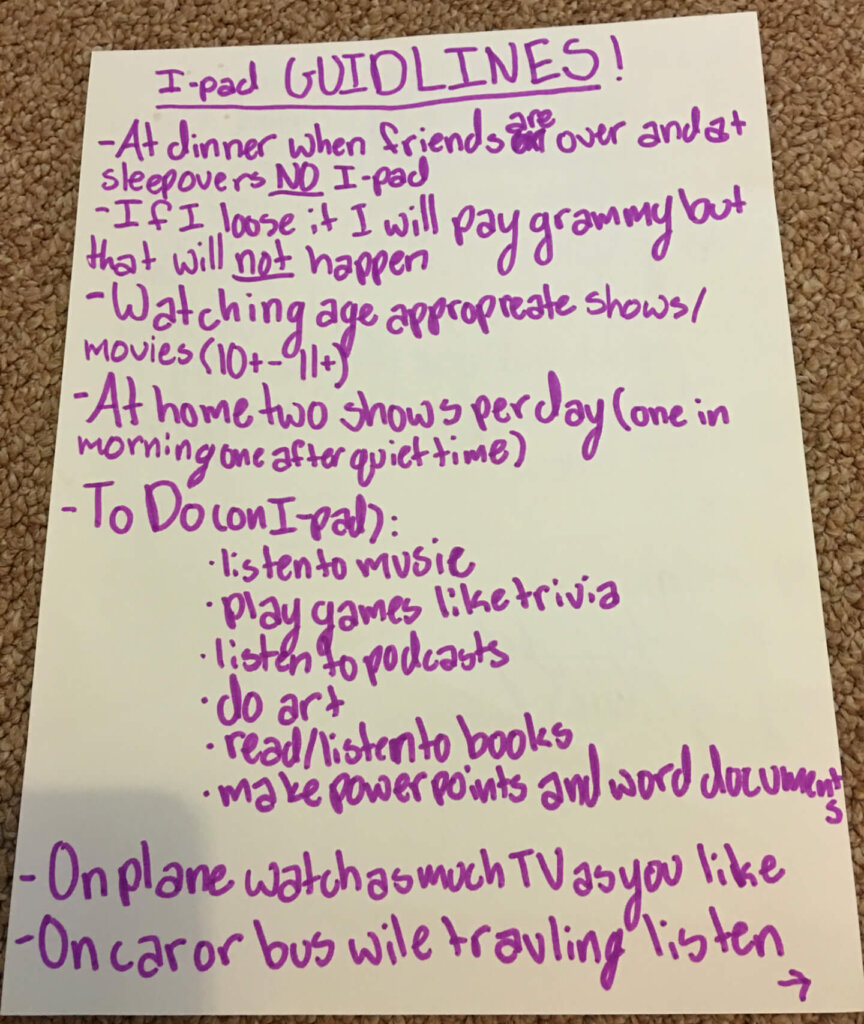
For children in grades 3-5
Have them write the first draft of the guidelines and then edit together for what you can both agree on.
Do this with every single device.
For children in grades K-2
Scaffold it by going through different scenarios and asking them what would be best for their brains and bodies. Things like WHEN they can be on the device (you can even put a little marker on their routine chart that shows it is “device time”) and for how long. Role play turning it off without a melt down. Let your child be the adult and you role play the child.
Make sure your guidelines include agreements about screen use that is not school related. Again, it has to align with YOUR family values and needs, there is no one single answer, as this screen time expert quickly realized when she was stuck home with her small children during the pandemic. I recommend keeping it attached to the academic part of the routine, so for example “Yes, when…” as opposed to “If, then.” It puts the ownership on them to finish their work and then they can watch the show. It takes you out of the power dynamic. “Yes, you can watch your show when you finish the math packet. How can I help get you started?”
Safety matters
Make sure you know what your children are watching or what games they are playing. Common Sense Media gives you instant answers for whether or not it is age appropriate.
Let routines be the boss
When they beg, want more time, or ask when they can watch their show, simply ask “when is your screen time?” Stay consistent and firm. As tempting as it is, avoid using screen time for rewards and punishment. Instead, focus on solutions and follow through.
When things go sideways, remember they are practicing and growing new skills. It takes a lot of executive functioning to handle technology (it’s powerful!).
Expect progress, not perfection, and approach it from a brain development based lens.
Each child is different for how it affects them and how responsible they are; use this time as an opportunity to bring awareness and create healthy screen habits that feel right for your family.
Looking for more tips? Check out our FREE back-to-school checklist. Proven strategies to start the school year off right.



Comments